Does Bleach Kill Mold?
Quick Response to Any Disaster
- 24/7 Emergency Response
- Expert Restoration Services
- Advanced Technology
- Customer-Focused Care
- Trusted & Reliable


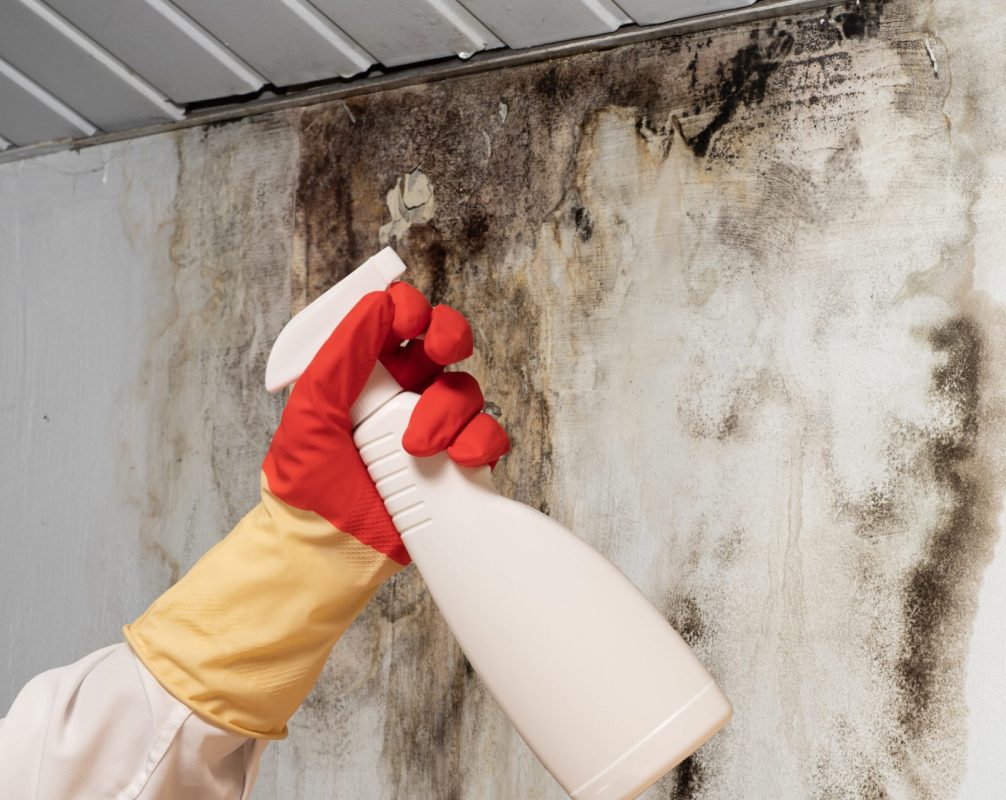
Bleach can kill mold organisms, but the EPA does not recommend chlorine bleach as a routine mold-cleanup method. Killing mold is not the same as removing it, and bleach does nothing to correct the moisture problem that allowed the growth to develop in the first place.
That distinction is especially important when mold appears on drywall, carpet, ceiling tile, insulation, or another porous material. Mold can grow into the spaces and crevices of absorbent materials, making complete cleanup difficult or sometimes impossible. Some moldy porous materials may need to be removed rather than simply sprayed with a cleaner.
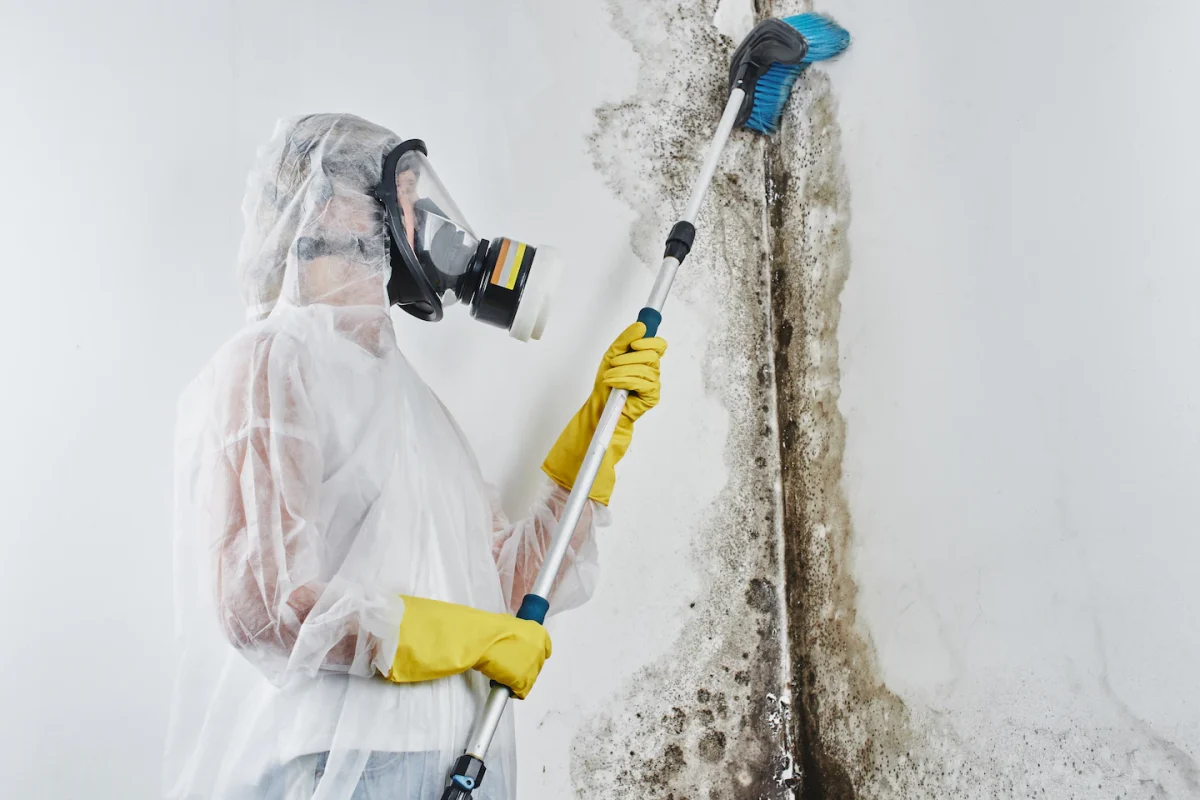
For small amounts of mold on hard, cleanable surfaces, the EPA generally recommends physically scrubbing the mold with detergent and water and drying the surface completely. The moisture source also needs to be corrected so the conditions supporting mold growth do not remain.
CleanPro Restoration Services provides mold remediation for qualifying properties in Morris, Illinois, and nearby communities. The company primarily serves residential properties and also performs some commercial work.
The most useful question is not simply whether bleach can kill mold. It is whether the mold can be removed from the affected material, whether moisture is still present, and whether the problem extends beyond the visible surface.
The most accurate answer is yes, bleach can kill mold organisms, but that does not make it the preferred routine approach for mold remediation.
Chlorine bleach is a biocide, which means it can destroy living organisms. The EPA, however, does not recommend routinely using biocides such as chlorine bleach as the main strategy for mold cleanup.
One reason is that mold cleanup requires more than changing whether the organism is alive. Dead mold can still remain on a surface and may still cause reactions in some people. Proper cleanup therefore involves physically removing the mold rather than simply treating it with a chemical and leaving the residue in place.
Normal homes also cannot realistically be made sterile. Mold spores naturally exist indoors and outdoors. Small amounts of spores remain in the environment even after a successful cleanup. What matters is whether those spores have enough moisture to begin growing.
That is why moisture control matters more than choosing a product marketed to “kill mold.”
If mold keeps appearing on a bathroom wall because condensation is persistent, spraying the surface does not fix the moisture condition. If drywall became moldy after a plumbing leak, treating only the visible face of the wall does not necessarily deal with moisture or growth deeper in the material.
The practical goal is to remove the mold growth and correct the moisture problem that allowed it to develop.
Porous materials are one of the biggest reasons a spray-and-wipe approach can fall short.
Drywall, carpet, ceiling tile, insulation, and many other building materials contain spaces that can hold moisture and allow mold growth below the visible surface. Mold can grow into those spaces, making complete cleanup much harder than it would be on a smooth, nonporous surface.
That is different from a small amount of mold sitting on tile, glass, or another hard material that can be scrubbed.
If mold develops on a hard surface, physical cleaning may be enough when the moisture problem has also been corrected. Moldy drywall after a plumbing leak is a different situation because the growth may not be limited to what is visible on the painted surface.
Bleach can also change the appearance of a stain. A homeowner may spray a dark patch, see the color lighten, and assume the problem has been solved. A lighter surface does not prove that the material has been fully cleaned or that growth deeper in the material is gone.
The same caution applies to wood. Wood varies in density, finish, age, and condition. Surface growth on finished wood is different from prolonged wetting of framing or another porous wood component.
When mold affects porous material extensively, when the material has deteriorated, or when it cannot be cleaned adequately, removal may become part of the remediation process.
That does not mean every piece of drywall or wood with a small mold spot must automatically be removed. The extent of growth, the condition of the material, the source of moisture, and how deeply the problem extends all matter.
EPA guidance puts moisture control and physical mold removal at the center of cleanup.
For a small amount of mold on a hard, cleanable surface, the basic approach is straightforward: correct the moisture problem, scrub the affected surface with detergent and water, and dry the area completely.
A practical small-area cleanup generally involves four steps:
The goal is not to find the strongest chemical in the cleaning aisle. Mold control depends on removing the growth and correcting the conditions that support it.
If the water problem is not fixed, even a thoroughly cleaned surface can develop mold again.
A cleaner cannot repair a leaking pipe.
It cannot stop water entering through a damaged building component. It cannot correct repeated condensation, a refrigerator supply-line leak, a dishwasher connection problem, or moisture that remains inside building materials after a water loss.
Imagine a refrigerator line leaking slowly behind an appliance. Mold becomes visible near the baseboard and lower drywall. Cleaning the visible patch may improve the surface, but the wall can continue getting wet as long as the leak remains.
The same thing can happen after a burst pipe or dishwasher leak. Visible water may be removed while moisture remains inside flooring, walls, or other materials.
That is why water damage restoration and mold remediation can become connected. A water loss may begin as a plumbing or appliance problem and later require mold remediation if moisture remains long enough for growth to develop.
CleanPro provides water extraction, water damage restoration, reconstruction, and mold remediation for qualifying properties.
If mold is already visible after a water loss, the next step should focus on the affected materials and the moisture condition rather than simply choosing another cleaning product.
For more information about professional mold cleanup, see mold removal and remediation.
Bleach is not automatically prohibited for every mold-cleaning situation.
The EPA does not recommend chlorine bleach or other biocides as a routine mold-remediation method, but there can be circumstances where their use is appropriate.
CDC homeowner guidance also allows bleach as one option for some household mold cleanup. When bleach is used, CDC recommends using no more than 1 cup of household laundry bleach in 1 gallon of water.
The key point is that bleach should not be treated as the entire solution.
If bleach is used on a small cleanable surface, the mold still needs to be physically removed and the moisture condition needs to be corrected.
Safety also matters. Never mix bleach with ammonia or other household cleaners. Mixing cleaning chemicals can create dangerous fumes. Keep the area ventilated and follow the product label.
More chemical is not necessarily better. The type of material and the extent of mold growth should guide the cleanup approach.
In many cases, yes.
EPA guidance says homeowners can usually handle mold cleanup when the affected area is less than about 10 square feet, roughly a three-foot-by-three-foot patch.
That measurement is a general guideline, not a rule that makes every small mold problem suitable for DIY cleanup.
A small patch on an accessible bathroom surface is very different from mold hidden inside a wall, mold involving an HVAC system, or growth associated with contaminated water.
The moisture source must also be addressed. Cleaning visible growth without fixing a leaking pipe, repeated condensation, or another water problem can allow the mold to return.
Homeowners should consider professional help when the affected area is larger, there has been substantial water damage, mold repeatedly returns, growth is hidden, or the problem involves sewage or other contaminated water.
Health conditions may also affect whether DIY cleanup is appropriate. People with respiratory conditions, allergies, weakened immune systems, or other health concerns should be more cautious around mold cleanup and may want to speak with a healthcare professional before doing the work themselves.
The size of the visible patch is only one part of the decision.
A professional mold-remediation evaluation may make sense when mold covers a larger area, keeps returning after cleaning, follows significant water damage, affects deteriorated materials, or appears to extend into areas that are difficult to inspect.
A persistent musty odor with no obvious visible growth can also signal a hidden moisture problem. Mold can develop behind drywall, under flooring, inside cabinets, or in other areas where it may not be immediately visible.
HVAC involvement deserves extra caution. If mold is suspected inside ductwork or another part of an active air-handling system, circulating air can move particles beyond the original area.
Mold following a water loss is another common situation. A pipe break, dishwasher leak, refrigerator-line failure, or storm-related water problem can affect areas that are difficult to see. A surface may appear normal while materials behind it remain damp.
The answer in those situations is not automatically to use more bleach. The useful questions are what became wet, how extensive the mold growth is, what materials are affected, and whether those materials can be cleaned or need remediation.
CleanPro’s mold services focus on mold remediation and the restoration work connected to affected building materials. If a project also calls for specialized laboratory testing, air sampling, or another type of assessment, those needs can be addressed separately based on the situation.
Bleach can kill mold organisms, including dark-colored molds, but the color of the mold does not change the basic cleanup approach. Mold still needs to be physically removed, and the moisture problem needs to be corrected.
The term “black mold” is often used broadly. Many different molds can appear dark brown, green, gray, or black, so color alone cannot reliably identify a species.
A dark patch should therefore not automatically be assumed to be one specific type of mold.
For cleanup decisions, the amount of growth, material involved, source of moisture, and location are generally more useful than the color.
If the mold covers a larger area or follows significant water damage, professional remediation may be more appropriate than attempting repeated surface cleaning.
Bleach should not be relied on as a routine solution for moldy drywall.
Drywall is porous, and mold can grow into its surface and internal spaces. That can make complete removal much more difficult than cleaning mold from a hard surface.
A small amount of superficial spotting from a short-term moisture issue is different from drywall that remained wet after a plumbing leak.
How long the wall stayed wet, whether growth extends beyond the visible surface, whether the drywall has deteriorated, and whether moisture reached the wall cavity all affect the proper response.
Spraying bleach may lighten discoloration without answering any of those questions.
If moldy drywall cannot be cleaned adequately or has been damaged by prolonged moisture, removal and reconstruction may become part of the remediation project.
No household cleaner permanently eliminates mold spores from a normal home.
Mold spores naturally exist in indoor and outdoor environments. The goal of mold cleanup is not to sterilize a property but to remove active growth and create conditions where mold cannot continue growing.
Moisture control is what makes the biggest difference.
If mold keeps returning in the same location, look for the moisture source rather than simply switching to a stronger chemical.
Common causes can include plumbing leaks, appliance leaks, repeated condensation, wet building materials, roof or exterior water intrusion, or moisture that remained after a previous water loss.
Once the moisture source has been corrected and affected materials have been properly cleaned or remediated, mold is much less likely to return in that area.
CleanPro Restoration Services provides mold remediation, water damage restoration, water extraction, and reconstruction for qualifying properties in Morris, IL, and nearby communities including Plainfield, Shorewood, Joliet, and Naperville.
For a small patch of mold on a cleanable hard surface, homeowner cleanup may be reasonable. For larger growth, recurring mold, hidden contamination, HVAC involvement, contaminated-water losses, or mold following substantial water damage, professional remediation may be the better next step.
Call CleanPro Restoration Services at (833) 588-2776 to discuss mold remediation for your property.