Storm Damage Repair
& Restoration

Serving Morris IL and the Surrounding Areas – 24/7 Emergency Response

Quick Response to Any Storm Disaster

  • Biological Washing
  • Biological Damage Assessment
  • Handling of Contaminated Contents
  • 100% Satisfaction Guaranteed for You
  • Trained and Certified by the IICRC
Call for Service

Our Restoration Experts Provide Immediate Response


Storm Damage Restoration and Repair: Wind, Hail, and Water Intrusion

Storm damage restoration focuses on repairing and restoring property after wind, hail, heavy rain, or another severe-weather event damages the building or allows water inside. The storm itself may last only minutes, but the damage can continue afterward as moisture moves through ceilings, walls, insulation, flooring, and framing.

Northern Illinois regularly experiences severe thunderstorms, damaging winds, hail, tornadoes, heavy rain, and winter weather. National Weather Service climatology for northern Illinois shows that severe weather is most common from spring through early fall, with hail and tornado activity strongest in late spring and damaging winds especially common during early and midsummer.

CleanPro Restoration Services provides storm damage restoration and reconstruction for qualifying properties in Morris, Illinois, and nearby communities. The company primarily serves residential customers while also handling select commercial restoration projects.

For storm losses, CleanPro’s confirmed work centers on the resulting property damage. That can include water extraction, structural drying, removal of damaged materials, repairs, and reconstruction. Permanent roof replacement, tree removal, and other specialized exterior trades should be handled by the appropriate contractor when those services are required.

CleanPro is available 24/7 for restoration calls at (833) 588-2776. Availability does not mean a guaranteed arrival time.

Trusted Water & Fire Restoration to restore your property.

Contact us today to consult with an expert!

Call for Service

Emergency Storm Damage Services

After severe weather, the first restoration priorities are keeping people safe, limiting additional water entry when practical, removing unwanted water, drying wet building materials, and determining what needs to be repaired.

Depending on the conditions at the property, a qualifying CleanPro storm-restoration project may involve:

  • Water extraction and removal when storm-related water reaches the interior.
  • Structural drying for wet ceilings, walls, flooring, framing, and other materials that can remain in place.
  • Moisture evaluation to determine how far water has moved beyond the visibly wet area.
  • Removal of damaged materials when drywall, flooring, insulation, trim, or other materials cannot be adequately restored.
  • Repairs and reconstruction after the affected area has been dried and damaged materials have been removed.

Some storm-damaged properties also need temporary board-up, roof covering, tree removal, or another emergency exterior service before interior restoration can begin. Those services are not currently confirmed as standard CleanPro offerings and should be verified for the individual project.

Temporary exterior protection can still be important. Property owners are generally expected to take reasonable steps after a loss to prevent additional damage when it can be done safely. If a roof or window opening is allowing rain to continue entering the home, the appropriate exterior contractor may need to control that opening before the interior can be dried effectively.

CleanPro should not be positioned as a roof-replacement company. When shingles, flashing, roof decking, or other roofing components require permanent repair, a qualified roofing contractor should determine that scope.

When standing water is already inside the building, see Emergency Water Removal for more information about extraction and the transition into structural drying.

Direct Insurance Billing - Working with all Insurance Providers

We Handle Direct Communication With Your Insurance Company

Trust CleanPro Restoration Services to Get Your Home or Business Back to Normal

Call Now to Speak With an Expert!

Call for Service

Water Intrusion: The Damage That Follows the Storm

Water intrusion often becomes the main restoration problem after the wind and rain have passed because moisture can travel much farther than the original opening.

A damaged roof, window, exterior wall, or other part of the building envelope may allow rain into an attic or wall cavity before any water becomes visible inside the living space. From there, moisture can soak insulation, spread along framing, reach ceiling drywall, move behind walls, or collect beneath flooring.

That is why a small ceiling stain does not necessarily mean only a small area is wet. The stain may be where water finally became visible rather than where the intrusion began.

Wind-driven rain can create similar problems. Water does not have to fall vertically through a large roof opening. Strong wind can push rain through damaged siding, window assemblies, exterior gaps, or other vulnerable areas. By the time the weather clears, moisture may already be trapped inside materials that look dry from the surface.

Restoration begins by determining what is wet and what can be saved. Standing water can be extracted when necessary, followed by drying and moisture monitoring. Drywall, flooring, insulation, or other materials that cannot be restored may need to be removed before repairs begin.

CleanPro’s confirmed water-damage work includes extraction and reconstruction, with structural drying also part of its current restoration offering. That makes storm-related interior water damage closely connected to the company’s primary water-restoration work.

If water reaches a basement or another below-grade area during a storm, see Basement Water Damage for general safety and drying information. Dedicated flooded-basement cleanup should still be confirmed for the specific loss rather than assumed to be a standard standalone service.

A future Ceiling Water Damage page can cover sagging drywall, wet insulation, ceiling staining, and water moving downward from an exterior opening in more detail.

Wind and Hail Damage Assessment

Wind and hail can damage exterior materials and create openings that allow water into the structure, even when the full extent of the damage is not obvious from the ground.

After a strong storm, a homeowner may notice displaced roofing materials, damaged siding, broken windows, exterior dents, fallen branches, or an obvious opening in the building. In other cases, the first sign is inside the house: a ceiling stain, damp wall, water near a window, or wet flooring that was dry before the storm.

Roof-specific conditions should be evaluated by an appropriate roofing professional. That includes determining whether shingles, flashing, decking, or another part of the roof needs repair or replacement. CleanPro’s role is better focused on the resulting restoration work inside the property.

For that interior work, documentation may include where water entered, which ceilings or walls became wet, where flooring was affected, moisture readings from building materials, and what ultimately needs drying, removal, or repair.

Photographs can be useful both for the restoration file and for an insurance claim. Take wide photographs that show the affected room as well as closer images of individual stains, damaged materials, or visible water entry. Documentation should be done only from safe locations. Homeowners should not climb onto a damaged or wet roof just to take photographs.

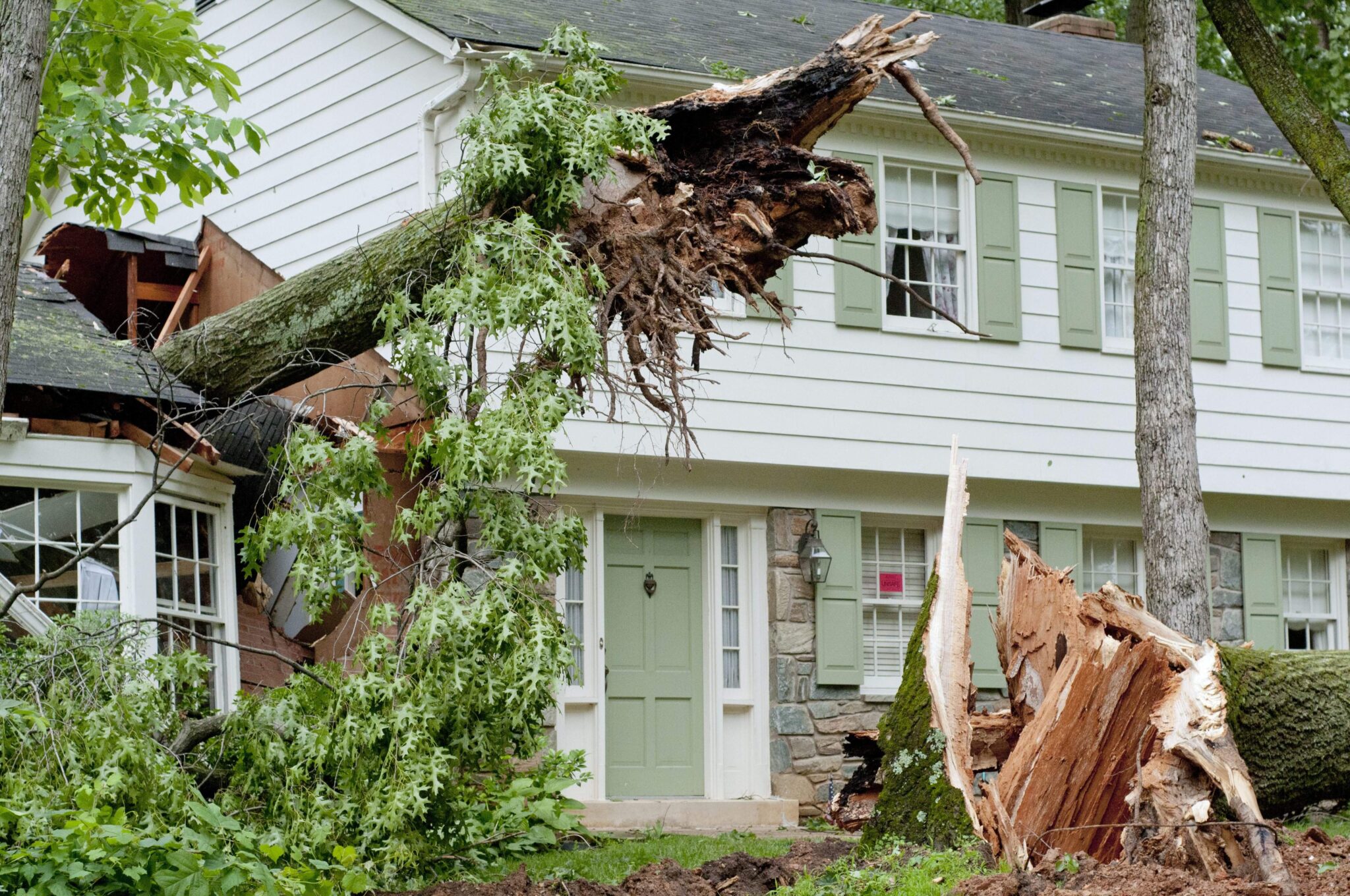
Tree and branch impacts need similar boundaries. If a tree has fallen onto the building, the tree itself should be handled by an appropriate tree-service provider. Once immediate hazards and exterior openings are addressed, CleanPro can evaluate qualifying water damage, interior repairs, and reconstruction.


Storm Damage Insurance Claims

Homeowners insurance commonly covers certain wind and hail losses, but coverage always depends on the individual policy, deductible, exclusions, cause of damage, and circumstances of the claim.

One of the most important distinctions after a storm is the source of the water. Wind-driven rain entering after a covered storm damages part of a building may be handled differently from rising outside floodwater. Standard homeowners insurance generally does not provide the same coverage for flooding, which is why homeowners should avoid treating every storm-related water loss as the same type of claim.

After discovering storm damage, document what you can safely see before major cleanup or repairs. Take reasonable temporary steps to protect the property from additional damage, and keep receipts when you pay another contractor for emergency protective work.

Contact the insurer promptly and describe the conditions as accurately as possible. It is better to explain what you observed—such as when the storm occurred, where water appeared, and what materials are visibly damaged—than to guess about a technical cause before the appropriate professional has evaluated it.

Keep photographs, estimates, invoices, moisture documentation, and other restoration records together. CleanPro can document relevant restoration conditions and the work performed, but the insurance carrier determines coverage, claim approval, deductibles, settlement amounts, and payment.

Homeowners may also encounter the terms actual cash value (ACV) and replacement cost value (RCV) during a storm claim. ACV generally reflects replacement cost after depreciation, while replacement-cost coverage is generally based on the cost to repair or replace covered property without the same depreciation deduction, subject to the policy.

That distinction can be especially noticeable on older exterior materials. A future Actual Cash Value vs Replacement Cost guide can explain those terms in more detail, while a separate Property Insurance Claims guide can cover documentation, adjuster meetings, and settlement review.

Trust CleanPro Restoration Services to Get Your Home or Business Back to Normal

Call Now to Speak With an Expert!

Call for Service

A Trusted Choice for Over 10,000 Home and Business Owners

Call for Service

Serving the Morris IL Areas


Serving Morris IL and the Surrounding Areas

CleanPro is available 24/7 to provide your home with comprehensive restoration services. Contact us today for a fast, free estimate!

Beware of Storm Chasers

Major storms often bring a rush of contractors into damaged neighborhoods, so homeowners should verify who they are hiring before signing an agreement or paying money.

Illinois consumer-protection guidance warns property owners about contractors and other solicitors who use storm damage to pressure people into making quick decisions.

Common red flags include:

High-pressure demands to sign a contract immediately.

Unclear company information or no verifiable local business presence.

Refusal to provide requested insurance or business documentation.

Demands for full payment before meaningful work begins.

Checks or payments made to someone other than the company on the contract.

Paperwork presented as a “free inspection” without a clear explanation of what the homeowner is authorizing.

Promises about exactly what an insurance company will pay before the carrier has evaluated the claim.

A legitimate contractor should be willing to explain the work, provide a written scope, answer questions about payment terms, and give the homeowner time to understand the agreement.

CleanPro Restoration Services is based in Morris and serves nearby communities, but the website should not use a specific number of years in business until the conflict between the client intake and existing website information is resolved.

A future Choosing a Restoration Company guide can provide a fuller contractor-selection checklist for homeowners after water, fire, mold, or storm damage.

Illinois Storm Seasons

Northern Illinois can experience damaging weather throughout the year, but severe thunderstorms, hail, tornadoes, and damaging winds are most common from spring through early fall.

National Weather Service climatology for the Chicago forecast area places most reported severe-weather activity between April and September. Tornado and damaging-hail activity is especially common during May and June, while damaging winds are most frequent during June and July.

Warm-season storms are not the only concern. Heavy rain can cause flash flooding during spring and summer, while organized thunderstorm systems can produce widespread straight-line wind damage across large parts of northern Illinois.

Derechos are one example. These long-lived thunderstorm systems can produce damaging winds over a broad area, resulting in fallen trees, damaged exterior materials, power outages, and water intrusion even when no tornado occurs.

Winter brings a different set of property problems. Snow, ice, freezing temperatures, and repeated freeze-thaw cycles can contribute to water intrusion. Ice dams can allow water to move beneath roofing materials and into attics, insulation, ceilings, or walls.

For Morris-area property owners, storm restoration therefore covers more than tornado recovery. Wind-driven rain, hail, straight-line wind, fallen limbs, heavy rain, and winter weather can all leave building materials wet or damaged.

Start with safety, document the damage, protect the property from additional loss when practical, contact the insurer, and address water intrusion promptly.

  1. Stay away from hazards. Avoid downed electrical lines, unstable trees, damaged ceilings, broken glass, standing water near electrical equipment, and visibly unstable parts of the structure.
  2. Document what you can safely see. Take photographs and video before major cleanup when practical.
  3. Protect the property from further damage. Temporary roof covering or board-up may be needed, but those services should be confirmed with the contractor performing the work.
  4. Notify the insurance company. Report the storm loss and ask what documentation or inspections are required.
  5. Begin necessary restoration. If water entered the building, extraction, drying, material removal, repairs, or reconstruction may be needed depending on the extent of damage.

CleanPro can evaluate qualifying storm-related interior damage and determine which of its restoration services fit the project.

Homeowners insurance commonly covers certain types of wind and hail damage, but the final coverage decision depends on the policy, deductible, limits, exclusions, and cause of loss.

Water entering after wind or hail damages the structure may be treated differently from rising outside floodwater. Policies can also have separate wind, hail, roof, or depreciation provisions.

The insurance carrier should explain which parts of the specific loss are covered. CleanPro can document restoration conditions and work performed, but it does not determine coverage or guarantee payment.

There is no single Illinois storm-claim deadline that applies to every homeowners policy, so storm damage should be reported promptly and the policy’s own deadlines should be reviewed.

Insurance policies may contain different requirements for initial notice, proof of loss, repairs, replacement-cost reimbursement, or legal action. Waiting unnecessarily can also make it harder to document when and how damage occurred.

Contact the insurer as soon as practical after discovering storm damage and ask which deadlines apply to the claim.

CleanPro Restoration Services provides storm damage restoration and reconstruction for qualifying projects in Morris, IL, and nearby communities within about a 35–40-mile radius.

CleanPro primarily serves residential properties while also accepting select commercial restoration work. Approved target communities include Plainfield, Shorewood, Joliet, and Naperville.

If wind, hail, heavy rain, or another severe-weather event has left water inside the property, wet ceilings or walls, damaged building materials, or areas requiring repair or reconstruction, contact CleanPro to discuss the restoration scope.

Call CleanPro Restoration Services at (833) 588-2776 for 24/7 storm damage restoration assistance in Morris, IL and approved nearby communities.