Water Heater Leaking
Quick Response to Any Disaster
- 24/7 Emergency Response
- Expert Restoration Services
- Advanced Technology
- Customer-Focused Care
- Trusted & Reliable


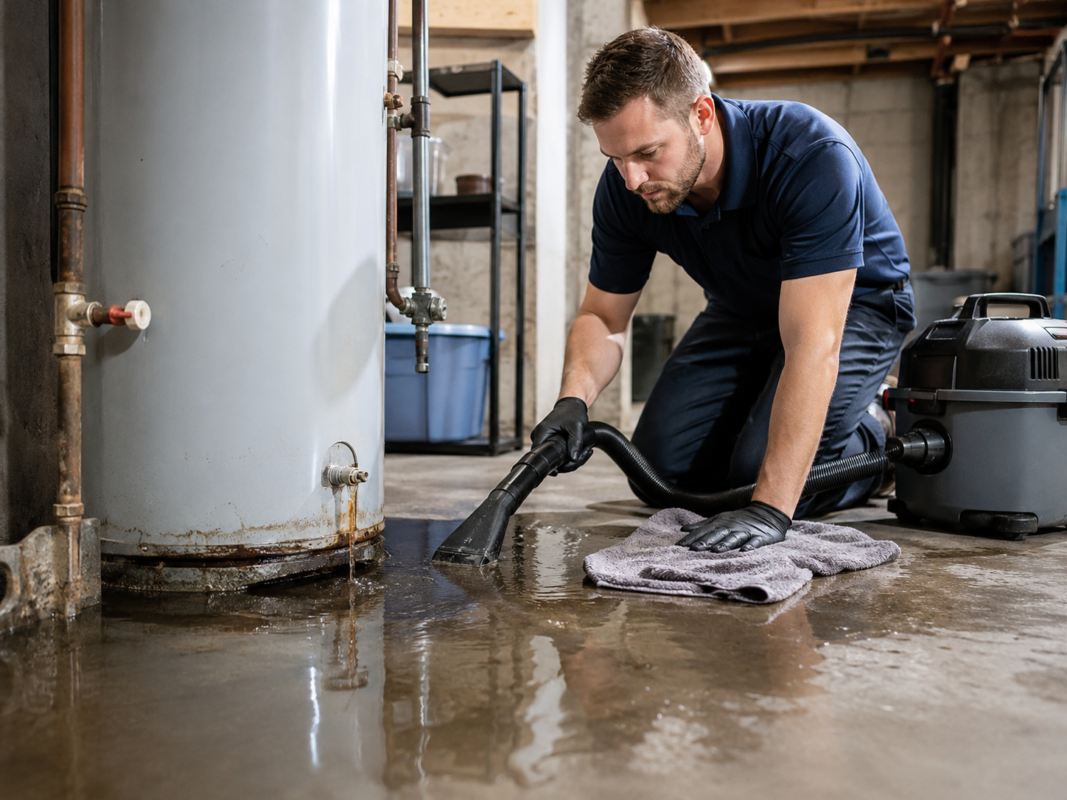
A leaking tank-style water heater can release stored water into surrounding building materials and may continue receiving additional water until its supply is shut off. Even a relatively small leak can move beneath flooring, reach drywall or subflooring, and affect nearby areas before the full extent of the moisture is visible.
The location of the leak can provide clues about what may be happening with the appliance. Water near the top may come from a fitting or connected plumbing line. A leak near the side may involve a temperature and pressure relief valve. Water at the bottom or underneath the tank may come from a drain valve, condensation, a connection above, or internal tank deterioration.
This diagnostic information is provided as general homeowner education. CleanPro Restoration Services does not repair water heaters or plumbing components. A plumber or other qualified technician handles the water heater itself; CleanPro handles the resulting water extraction, structural drying, cleanup, repairs, and reconstruction.
CleanPro Restoration Services provides 24/7 water damage restoration from Morris, Illinois, primarily for residential properties and select commercial losses within about a 35–40-mile radius.
When a leaking water heater has damaged flooring, drywall, ceilings, insulation, cabinets, or nearby building materials, call CleanPro at (833) 588-2776.
When a water heater starts leaking, safely shut down the appliance and water supply when possible, protect yourself from electrical or gas hazards, document the visible damage, and contact the appropriate professionals.
Follow these four steps:
These shutdown and safety steps are general educational guidance and should not be interpreted as CleanPro providing appliance repair or plumbing work.
If you smell natural gas, hear hissing, or suspect a gas leak, do not attempt to troubleshoot the appliance. Leave the property and contact the gas utility or emergency services from a safe location.
Standing water near an electric water heater can also present a serious electrical hazard. Do not walk through water to reach the appliance or breaker panel. When electricity cannot be shut off safely from a dry location, wait for an appropriate qualified professional.
Where the water first appears may help narrow down the source of a leak, although water can travel along plumbing lines or the outside of the tank before reaching the floor.
A puddle directly beneath a water heater does not automatically mean the tank has failed. Look for the highest visible wet point and have the appliance evaluated by a plumber or qualified water-heater technician.
The examples below are general diagnostic information rather than CleanPro plumbing services.
Sediment, component wear, and internal corrosion can contribute to water-heater problems over time. The anode rod is intended to help protect the tank from internal corrosion, while mineral buildup can affect appliance performance.
This information is included to help homeowners understand possible causes. It should not imply that CleanPro diagnoses, maintains, repairs, or replaces water heaters.
Do not remove access panels, test pressure-relief devices, tighten gas components, or drain the appliance unless you are qualified to do so and are following the manufacturer’s instructions.
A leak from a fitting, valve, connection, or gasket may be repairable, while a confirmed leak from the internal tank generally points toward replacement.
The most important issue is determining whether the water is coming from a serviceable component or from the tank itself.
Fittings, valves, connected plumbing, and certain seals may sometimes be repaired or replaced. Internal tank deterioration is different because the tank functions as the appliance’s pressure vessel.
As general industry guidance, traditional tank water heaters are often discussed as having a service life in the range of approximately 8–12 years, although actual lifespan varies with installation, maintenance, usage, water quality, and model.
Age alone should not determine whether a unit is repaired or replaced. A qualified plumbing professional should evaluate:
Replacement may be more practical when the tank itself is leaking, substantial corrosion is present, the appliance has repeated failures, or repairs no longer make economic sense.
A plumber or qualified water-heater technician should make the repair-or-replace decision. CleanPro’s role is limited to the property damage caused by the leak.
When water has reached building materials, CleanPro can evaluate the restoration scope and address extraction, structural drying, repairs, and reconstruction as needed.
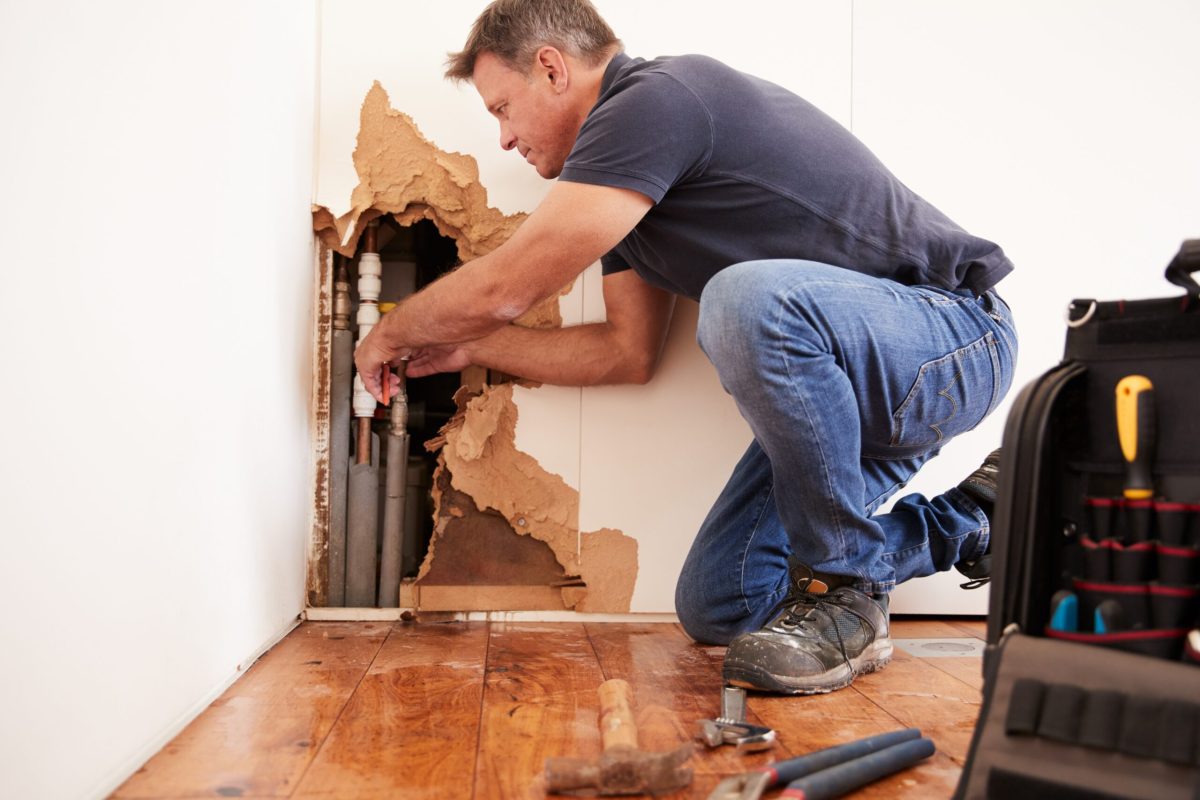
Water from a leaking water heater can affect more than the area directly around the unit. Depending on how long the leak has been present and where the water travels, moisture may reach flooring, drywall, insulation, cabinets, framing, ceilings, and other nearby building materials.
The amount of visible water does not always show the full extent of the damage. A slow leak can remain hidden behind the water heater, beneath flooring, or inside wall cavities before signs such as staining, swelling, warping, or dampness become noticeable.
Commonly affected materials may include:
Carpet and carpet padding
Vinyl, laminate, or hardwood flooring
Subflooring
Drywall and trim
Insulation
Cabinets
Ceiling materials below the leak
Wood framing
Leaks in lower-level or hard-to-reach areas can also spread into concealed materials even when the visible water appears limited. CleanPro can evaluate the affected areas to determine how far the moisture has traveled and what restoration work may be needed.
The restoration process may include water removal, moisture assessment, structural drying, monitoring affected materials, and identifying areas that require repair or reconstruction. Some materials may be dried and saved, while others may need to be removed if they are too damaged or cannot be dried effectively.
Wet building materials should be addressed as soon as possible because prolonged moisture can create conditions that support mold growth. Prompt drying can also help reduce the risk of additional damage to surrounding materials.
Many straightforward water damage projects may be completed in around three days, although larger or more complex losses can take longer. The timeline depends on factors such as moisture spread, the materials affected, drying conditions, and whether repairs or reconstruction are needed.
Once the leaking appliance or plumbing source has been controlled, a water damage restoration crew can begin addressing the damage to the property.
Homeowners insurance may cover certain water damage caused by a sudden water-heater failure, but coverage depends on the individual policy, the cause of the loss, and the insurance carrier’s review.
Insurance companies often distinguish between sudden, accidental water damage and damage that developed gradually over time. Coverage for damaged flooring, drywall, cabinets, or other building materials may also be different from coverage for repairing or replacing the water heater itself.
When reviewing a claim, an insurance carrier may consider factors such as:
The cause of the leak
Whether the damage was sudden or gradual
When the leak was discovered
Whether maintenance issues were involved
Which materials were affected
Policy exclusions and limitations
The applicable deductible
The specific terms of the policy
If it is safe to do so, take photos of the visible damage, keep records related to appliance repairs and restoration work, and report the loss according to your insurance company’s instructions.
CleanPro can document visible property damage and provide relevant restoration information to the property owner and insurance company. Coverage, claim approval, and payment decisions are determined by the insurance carrier based on the terms of the policy.
For more information, see Does Homeowners Insurance Cover Water Damage? Claims, Coverage, and Exclusions.
Cold water may remain available in some plumbing configurations after the leaking water heater has been safely isolated, but homeowners should not continue operating a leaking heater until it has been evaluated by a qualified professional.
This is general plumbing guidance rather than a CleanPro service instruction.
If isolating the heater does not stop the leak, the building’s main water supply may need to be shut off. Contact a plumber or appropriate plumbing professional for guidance specific to the property.
There is no dependable countdown because the severity of a leak depends on its source and the condition of the appliance.
A small fitting leak and a deteriorated internal tank do not present the same level of risk.
A qualified plumber should evaluate the unit rather than relying on a specific number of hours or days.
From a restoration standpoint, the important issue for CleanPro is whether water has reached building materials and requires extraction, drying, repair, or reconstruction.
A leaking water heater may need replacement when the internal tank has failed, while some leaks from valves, fittings, or other serviceable components may be repairable.
A plumber or qualified technician should identify the source and determine whether repair or replacement is appropriate.
CleanPro does not repair or replace the water heater itself. CleanPro handles the resulting water-damage restoration when the leak affects the property.
CleanPro Restoration Services is available 24/7 for water damage restoration after a leaking water heater affects a property in Morris, IL, or surrounding communities within approximately a 35–40-mile service area.
CleanPro primarily serves residential properties and also handles select commercial restoration projects, including properties in Plainfield, Shorewood, Joliet, and Naperville.
When a water heater leaks, CleanPro focuses on restoring the affected areas of the property. Services may include water extraction, structural drying, cleanup, repairs, and reconstruction based on the extent of the damage. The water heater or plumbing component itself should be inspected and repaired by a plumber or qualified water-heater professional.
If water has spread into lower-level areas, wall cavities, flooring, or other concealed materials, contact CleanPro and describe what happened so the team can evaluate the affected areas and determine the appropriate restoration steps.
Call CleanPro Restoration Services at (833) 588-2776 for 24/7 water damage restoration after a leaking water heater in Morris, IL, and nearby communities.