Mold Removal vs Mold Remediation
Quick Response to Any Disaster
- 24/7 Emergency Response
- Expert Restoration Services
- Advanced Technology
- Customer-Focused Care
- Trusted & Reliable

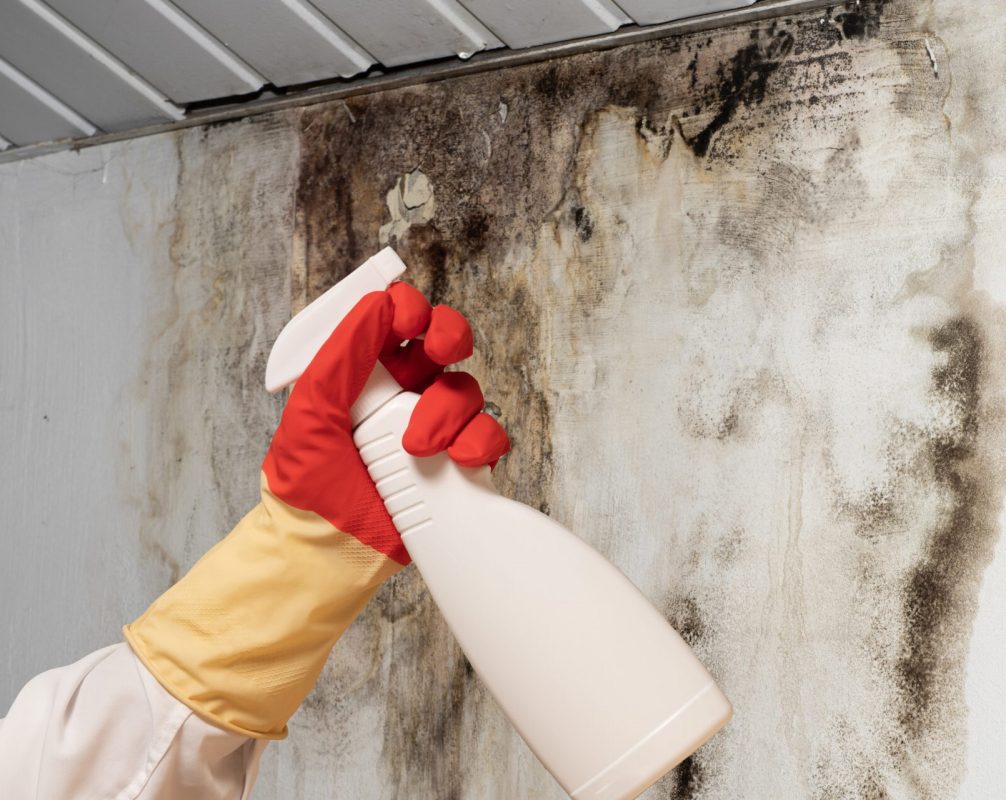
Mold removal means physically cleaning or removing visible mold growth, while mold remediation is the broader process of controlling moisture, containing affected areas when needed, removing contaminated materials, cleaning remaining surfaces, and restoring damaged areas. The terms overlap, but remediation describes more than simply making visible mold disappear.
That difference matters when deciding whether a small patch is reasonable to clean yourself or whether the problem calls for professional work. Mold growing on a limited section of a hard bathroom surface is different from growth behind drywall after a plumbing leak or mold spreading across several building materials.
EPA also makes an important point that changes how homeowners should think about the word “removal”: eliminating every mold spore from an indoor environment is not realistic. Mold spores naturally exist indoors and outdoors. The practical goal is to remove unwanted growth and control the moisture that allows it to return.
CleanPro Restoration Services provides mold remediation along with water-damage restoration, repairs, and reconstruction for qualifying projects in Morris, Illinois and approved nearby communities. This page focuses primarily on the informational side—what the terminology means, what small-scale DIY cleanup can and cannot accomplish, and when professional remediation makes more sense.
Mold removal, remediation, mitigation, and abatement are related terms, but they describe different parts or scopes of dealing with unwanted mold growth.
| Term | What it covers | When you may hear it used |
| Mold removal | Physical cleaning or removal of visible mold and mold-contaminated material | Often used by homeowners searching for ways to get mold off surfaces |
| Mold remediation | Moisture evaluation, containment when needed, physical removal, cleaning, drying, and restoration | Common professional term for a complete mold project |
| Mold mitigation | Actions intended to limit the spread or severity of a mold or moisture condition | Often used for early control measures before or during remediation |
| Mold abatement | Reduction or removal of a hazardous or unwanted condition | Sometimes used interchangeably with remediation, though terminology varies by company and region |
“Mold exterminator” is another phrase people search for, but extermination is not a very accurate description of mold work. Mold is not treated like an insect infestation, and EPA notes that it is impossible to eliminate all mold spores from an indoor environment.
The distinction between removal and remediation becomes clearest when moisture is involved.
If someone wipes mold off a wall but a plumbing leak inside that wall continues, the visible growth may disappear temporarily while the conditions that supported it remain. Remediation looks beyond the surface and considers whether water, humidity, concealed materials, or damaged construction need attention.
Professional mold-remediation practices may also reference the ANSI/IICRC S520 Standard for Professional Mold Remediation. The current IICRC S520 is the 2024 Fourth Edition and covers professional procedures involving assessment, structural remediation, equipment, documentation, safety, HVAC considerations, and post-remediation verification.
Yes, some small mold problems can be cleaned by homeowners, but EPA uses an area of about 10 square feet—roughly a 3-foot-by-3-foot patch—as a general dividing point for when professional guidance should be considered.
EPA says that in most cases, homeowners can handle a moldy area smaller than approximately 10 square feet themselves. Larger areas, extensive water damage, mold associated with contaminated water, or more complicated conditions call for greater caution and may warrant experienced professional help.
A reasonable DIY situation usually looks more like this:
Professional evaluation makes more sense when mold is widespread, repeatedly returns, is hidden behind building materials, follows major water damage, involves contaminated water, or requires removing drywall, insulation, flooring, or other materials.
EPA also recommends consulting an experienced contractor when a mold problem exceeds its small-area guideline.
For projects that have moved beyond small surface cleanup, a mold remediation company can evaluate the affected materials, moisture conditions, containment needs, removal work, and repairs.
For a small mold problem on a hard surface, physical cleaning and complete drying matter more than finding a product that promises to “kill mold forever.”
There is a lot of online advice about vinegar, hydrogen peroxide, baking soda, bleach, and specialty sprays. These products should not all be treated as equivalent, and none replaces moisture control or physical removal.
White vinegar: Vinegar is commonly suggested as a household cleaner for small hard-surface mold spots. Its acidity can make it useful for some general cleaning tasks, but EPA does not list vinegar as its standard mold-cleanup recommendation. It should not be treated as a solution for mold inside drywall, carpet, insulation, or other porous building materials.
If you use vinegar on a compatible hard surface, follow the product and surface manufacturer’s instructions and never mix it with bleach or other cleaning chemicals.
Hydrogen peroxide: Household hydrogen peroxide is also commonly used as a surface-cleaning product. Its usefulness is limited to accessible materials that tolerate it, and it should not be confused with professional remediation. Mold beneath a surface or inside a porous material will not be corrected simply because the visible surface has been treated.
Baking soda: Baking soda can act as a mild abrasive during surface cleaning and may help with some odors. It does not remove mold embedded deeply in porous building materials and does not correct the water or humidity problem supporting the growth.
Detergent and water: This is the method directly recommended by EPA for mold on cleanable hard surfaces. EPA advises scrubbing mold from hard surfaces using detergent and water and then drying the area completely. Porous materials such as carpet or ceiling tiles may need disposal when mold cannot be fully removed.
The practical lesson is that scrubbing and removing mold from the material matters more than simply applying a chemical and walking away.
Bleach deserves separate treatment because homeowner advice about it is often contradictory. EPA does not recommend chlorine bleach or other biocides as a routine mold-cleanup practice and notes that dead mold can still trigger allergic reactions, so killing mold is not enough—the contamination still needs to be removed.
A future Does Bleach Kill Mold? guide can cover where EPA and CDC guidance differs and when disinfectants may be used.
Whatever cleaning product is chosen, never mix chemicals. Use appropriate gloves and eye protection, ventilate according to the product instructions, and stop if the condition is larger or more complicated than expected.
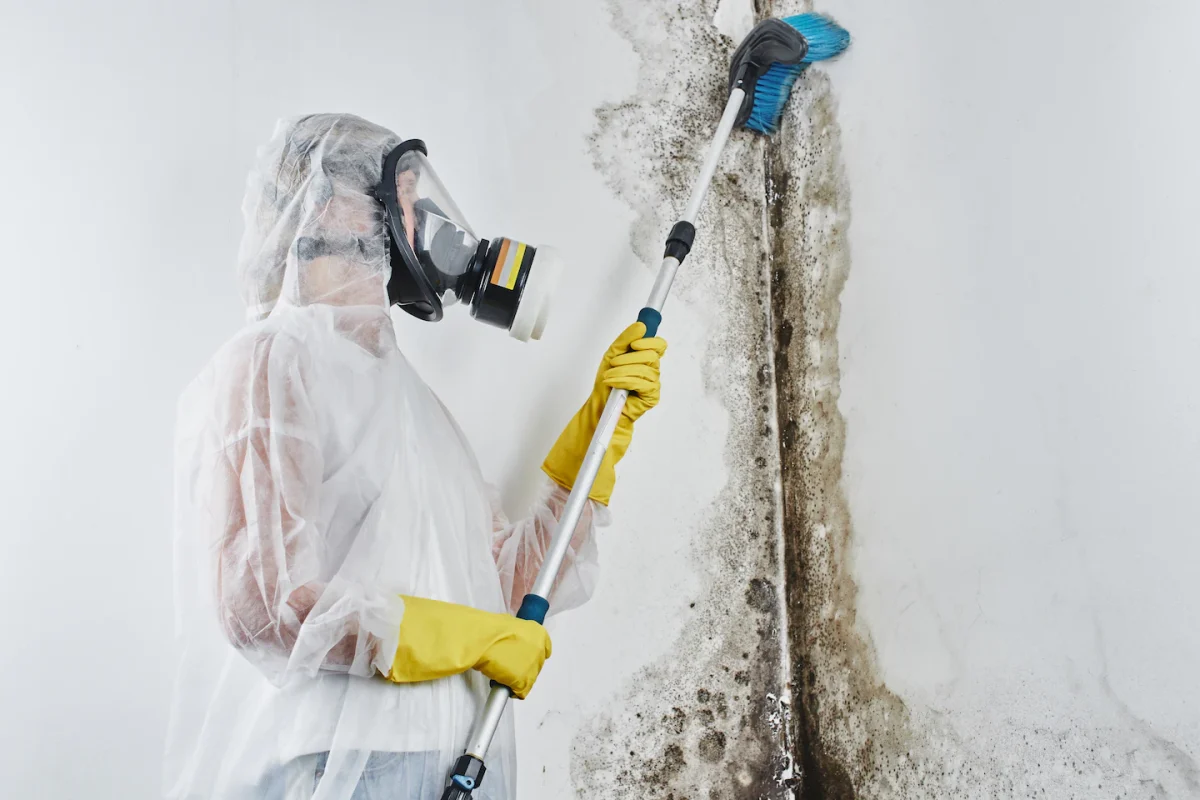
Professional remediation is designed to control the work area, physically remove mold contamination, manage airborne particles, correct moisture conditions, and restore damaged building materials—not simply erase a stain.
That difference becomes more important as the project gets larger.
A professional remediation project may involve:
Containment. Plastic barriers or other controls may separate the work area from unaffected parts of the building.
Negative air. Depending on the project, equipment can be used to maintain airflow toward the contained work area rather than allowing particles generated during removal to travel freely into surrounding rooms.
HEPA filtration. HEPA-filtered air scrubbers and vacuums may be used to capture very small airborne or surface particles during remediation.
Physical removal. Mold-contaminated drywall, insulation, carpet, or other porous material may need to be removed when adequate cleaning is not practical.
Cleaning. Remaining structural materials can be physically cleaned according to their condition and the project scope.
Moisture correction. A leaking plumbing line, wet building material, condensation problem, or another moisture condition needs to be corrected or mold may return.
Post-remediation evaluation. Depending on the project, work may be visually evaluated or subject to additional verification before containment is removed and reconstruction begins.
The IICRC S520 standard emphasizes physical source removal rather than relying only on chemical products to kill or encapsulate mold. It states that attempts to kill, encapsulate, or inhibit mold without proper physical removal are generally not adequate substitutes for remediation.
That is the core difference between cleaning a small visible spot and remediating a building problem.
Mold repair begins after contaminated or damaged materials have been cleaned or removed and the moisture condition has been corrected.
Mold does not always require major construction. A small surface problem may leave little or nothing to rebuild.
Larger problems can be different.
If mold has affected porous or damaged materials, restoration may involve replacing:
EPA notes that porous or absorbent materials may have to be discarded because mold can grow into spaces and crevices that are difficult or impossible to clean completely.
Repair should follow remediation rather than cover it.
Painting over mold is not a repair. EPA specifically advises cleaning and drying moldy surfaces before painting or caulking because coatings applied over mold are likely to fail.
CleanPro provides both mold remediation and reconstruction within its confirmed services. When a qualifying project requires building materials to be removed during remediation, reconstruction can address the damaged finishes after the remediation work is completed.
The price of mold removal depends mainly on whether you are cleaning a small accessible surface yourself or dealing with a larger remediation project involving containment, material removal, and repairs.
A small DIY project may involve only the cost of cleaning supplies, gloves, eye protection, disposable materials, and other basic protective items.
Professional work is priced very differently because the contractor may need containment materials, HEPA filtration, protective equipment, labor, demolition, disposal, cleaning, drying, and reconstruction.
Current 2026 Angi data puts professional mold remediation at approximately $1,223 to $3,757 for many projects, with pricing commonly around $10 to $25 per affected square foot. These are national consumer-market figures, not CleanPro prices or guarantees.
Location also changes the scope.
A small accessible bathroom area is different from mold behind multiple walls or inside a difficult-to-access building assembly. Repair costs can also push the total higher after contaminated drywall, flooring, insulation, or other materials are removed.
The deciding factor is therefore not whether someone calls the project “mold removal” or “mold remediation.” It is how much material is affected and what must actually be done to correct the condition.
For a more detailed cost breakdown, see Mold Remediation Cost.
Mold can return after cleanup when the moisture condition that supported the original growth remains.
This is why EPA repeatedly centers mold guidance on moisture control.
EPA states that if mold is cleaned but the water problem is not fixed, the mold problem will most likely return. It also recommends keeping indoor humidity below 60% where possible, ideally around 30% to 50%.
Common moisture conditions that can contribute to recurring growth include:
If mold appeared after a water loss, correcting the water damage matters just as much as cleaning the visible growth.
For example, a refrigerator line can leak beneath flooring before the homeowner notices the problem. A pipe break may send water into a wall cavity. A dishwasher connection can wet cabinets and adjoining materials. If those materials stay damp, cleaning mold from the visible surface does not correct the larger moisture condition.
This is where water damage restoration and mold remediation overlap. Extraction and structural drying address the retained water; mold remediation deals with mold growth that has already developed.
A future Mold Prevention guide can cover humidity control, condensation, ventilation, leak detection, and water-loss prevention in greater detail.
Not in the sense of permanently eliminating every mold spore from a building, because mold spores naturally remain present in indoor and outdoor environments.
EPA states that completely eliminating all indoor mold and mold spores is impossible. What can be controlled is unwanted indoor growth. When affected materials are properly cleaned or removed and moisture remains controlled, mold should not have the conditions it needs to keep growing.
That is why a successful project should be judged by whether the unwanted growth and moisture problem have been corrected, not whether a product claims to make a building permanently “mold free.”
Nothing permanently kills every mold spore in a home; long-term mold control depends on removing unwanted growth and keeping the affected materials dry.
Products marketed as mold killers can distract from the work that matters.
EPA explains that even dead mold can still cause allergic reactions in some people, so simply killing the organism is not enough. Physical cleaning or removal is still required, and moisture must be controlled afterward.
For a small mold patch on a cleanable hard surface, detergent and water followed by complete drying may be sufficient. For larger, hidden, recurring, or water-damage-related growth, professional remediation may be the safer approach.
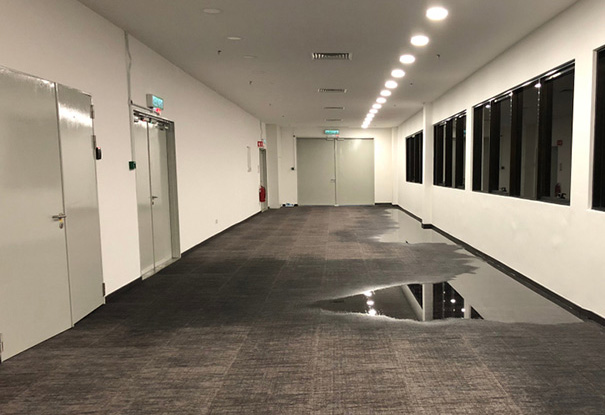
CleanPro Restoration Services provides mold remediation for qualifying projects in Morris, IL, and approved nearby communities within approximately a 35–40-mile radius.
CleanPro primarily serves residential properties and also accepts select commercial restoration projects. Approved target communities include Plainfield, Shorewood, Joliet, and Naperville.
If mold covers more than a small surface area, keeps returning, has spread into building materials, or developed after a water loss, contact CleanPro to describe the condition and determine whether professional remediation is appropriate.
Call CleanPro Restoration Services at (833) 588-2776 to discuss mold remediation in Morris, IL and approved nearby communities.