Mold Remediation & Removal Experts
Serving Morris IL and the Surrounding Areas – 24/7 Emergency Response
Fast Mold Removal
- Biological Washing
- Biological Damage Assessment
- Remediation of Mold & Infested Materials
- Cleanup of Contents & Belongings





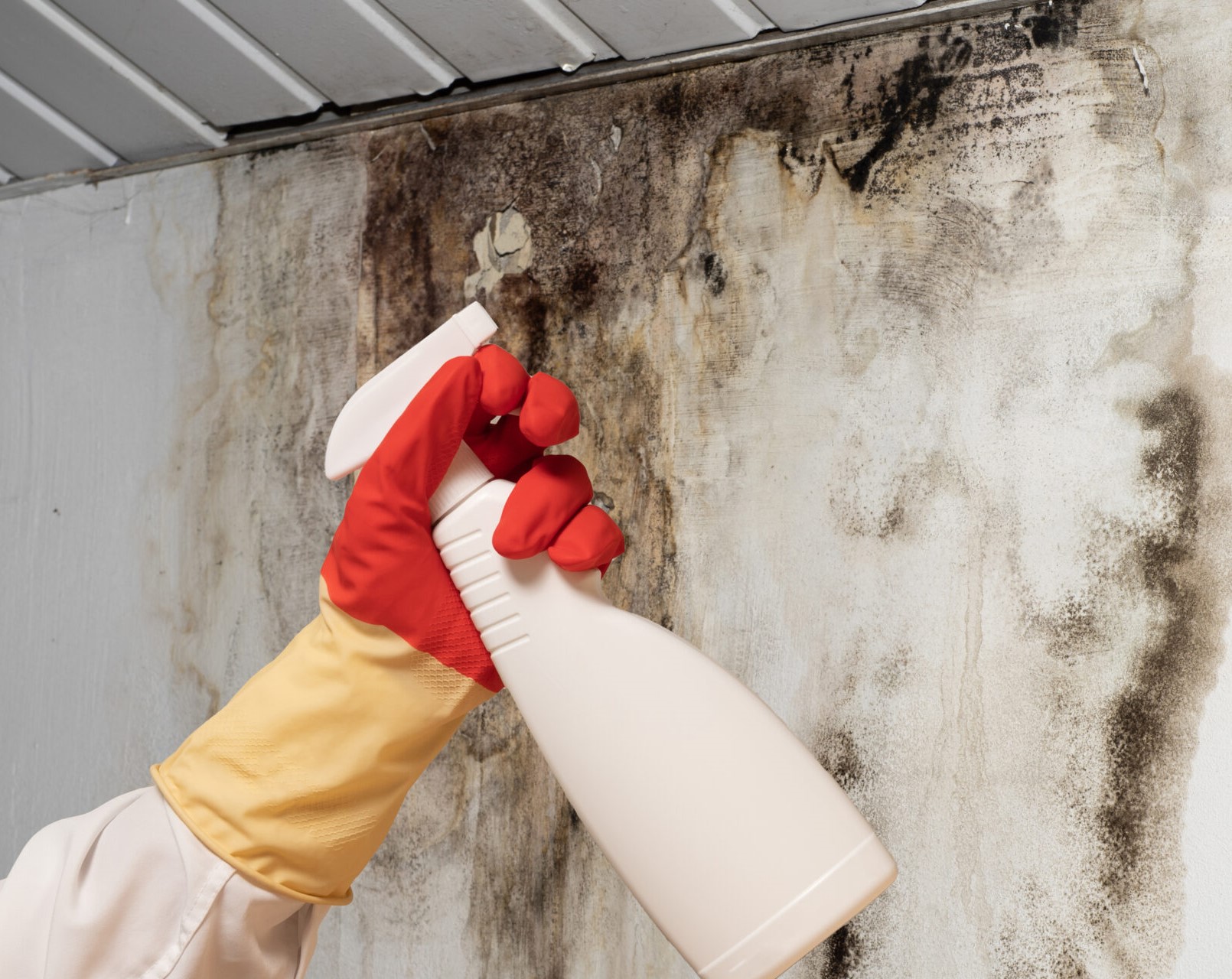
CleanPro Restoration Services provides mold remediation in Morris, Illinois, for properties where indoor mold growth needs to be contained, removed, cleaned, and addressed at the moisture source. The goal is not simply to cover visible mold or change how a room smells. Effective remediation addresses the affected materials and the water or humidity condition that allowed mold to grow.
Mold and moisture often go together. After a pipe break, appliance leak, roof or storm-related water intrusion, or another moisture problem, mold can begin developing on damp materials relatively quickly. FEMA guidance states that mold colonies can begin growing on damp surfaces within about 24–48 hours, which is why drying wet materials promptly matters after a water loss.
CleanPro Restoration Services provides mold remediation along with water damage restoration, fire damage restoration, storm damage restoration, and reconstruction. CleanPro primarily serves residential properties while also accepting select commercial restoration projects.
The company is based in Morris and serves approved nearby communities within approximately a 35–40-mile radius, including Plainfield, Shorewood, Joliet, and Naperville.
Call CleanPro Restoration Services at (833) 588-2776 to discuss a mold problem and determine the appropriate remediation service.

Professional mold remediation focuses on finding the affected area, controlling the moisture problem, containing mold during the work, physically removing contamination, cleaning remaining materials, and completing repairs when necessary.
Depending on the conditions found at the property, a mold-remediation project may involve:
The exact scope should be based on what is actually found rather than on a one-size-fits-all mold treatment.
CleanPro also handles select commercial restoration projects. Commercial mold remediation may require additional planning for containment, building access, occupancy, and scheduling, so each property is assessed individually to determine the most appropriate restoration approach.
Mold remediation is the process of correcting the moisture problem, removing mold growth and contaminated materials when necessary, cleaning affected areas, and returning the environment toward normal indoor conditions.
Mold remediation and mold removal are often used interchangeably by homeowners, but they are not exactly the same idea. “Removal” describes physically eliminating mold-contaminated material or growth. “Remediation” is broader because it also addresses containment, moisture control, cleanup, and restoration.
EPA explains that completely eliminating all mold spores from an indoor environment is not practical. Mold spores occur naturally, and the critical control is moisture: indoor mold growth cannot continue without sufficient moisture.
That is why painting over mold, spraying a surface, or simply killing visible growth is not the same as completing remediation.
Industry professionals may also reference the ANSI/IICRC S520 Standard for Professional Mold Remediation, which establishes an industry framework for mold-remediation practices. IICRC describes S520 as its professional mold-remediation standard.
For a deeper comparison between the two terms, see Mold Removal vs. Mold Remediation.
A mold-remediation project generally moves from identifying the affected conditions into containment, controlled removal, cleaning, drying, and reconstruction when building materials have been damaged.
The scope can vary, but the process commonly follows six stages:
The first step is determining where visible growth is present, which materials are affected, and what moisture source is allowing mold to continue growing. The moisture problem should be addressed as part of the overall solution.
Plastic barriers and controlled work areas may be used to separate mold-remediation activities from unaffected portions of the building. Depending on the project, negative-air pressure may also be used to help control movement from the work zone.
HEPA-filtered equipment, sometimes referred to as air scrubbers, may be used during the project to help capture airborne particles generated while contaminated materials are disturbed or removed.
Some hard surfaces can be cleaned, while porous materials may need removal when mold has penetrated deeply or the material cannot be adequately restored. EPA specifically notes that porous materials such as ceiling tile and carpet may need to be discarded when mold cannot be removed completely.
Physical removal and cleaning are central to remediation. Chemical products or antimicrobial treatments may sometimes be used as part of a project, but they are not substitutes for removing mold contamination and correcting moisture.
After mold and moisture issues are addressed, damaged drywall, insulation, flooring, trim, or other building materials may need to be repaired or replaced. CleanPro provides reconstruction services to help restore affected areas and return the property to a finished condition.
This is why remediation is more than spraying mold with a chemical. The underlying moisture condition, affected materials, containment needs, and repair scope all matter.
A future Restoration Equipment guide can explain HEPA filtration, negative-air machines, dehumidifiers, moisture meters, and related restoration equipment in greater depth.
“Black mold” commonly refers to dark-colored indoor mold, including the species Stachybotrys chartarum, but the color or species does not change the basic principle: indoor mold growth and the moisture supporting it should be addressed.
CDC describes Stachybotrys chartarum as a greenish-black mold that can grow on cellulose-rich materials such as gypsum board and paper when sufficient moisture is present. Certain molds, including Stachybotrys, can produce mycotoxins under some conditions, but the presence of a particular species does not automatically establish a particular health effect.
CDC also advises that homeowners generally do not need to identify which species of mold is growing before addressing it. Stachybotrys chartarum and other indoor molds should be treated similarly from a removal standpoint.
For homeowners, that means the practical questions are usually:
EPA says homeowners can often handle an area smaller than about 10 square feet, roughly a 3-foot-by-3-foot patch, when the situation is otherwise straightforward. Larger areas, extensive water damage, contaminated water, hidden growth, or more complicated building conditions are reasons to consider professional help.
CleanPro provides mold remediation for properties affected by mold growth. When dark or black-colored mold is present, the affected areas can be assessed based on the extent of the growth, the materials involved, and the underlying moisture conditions so the appropriate remediation approach can be determined.
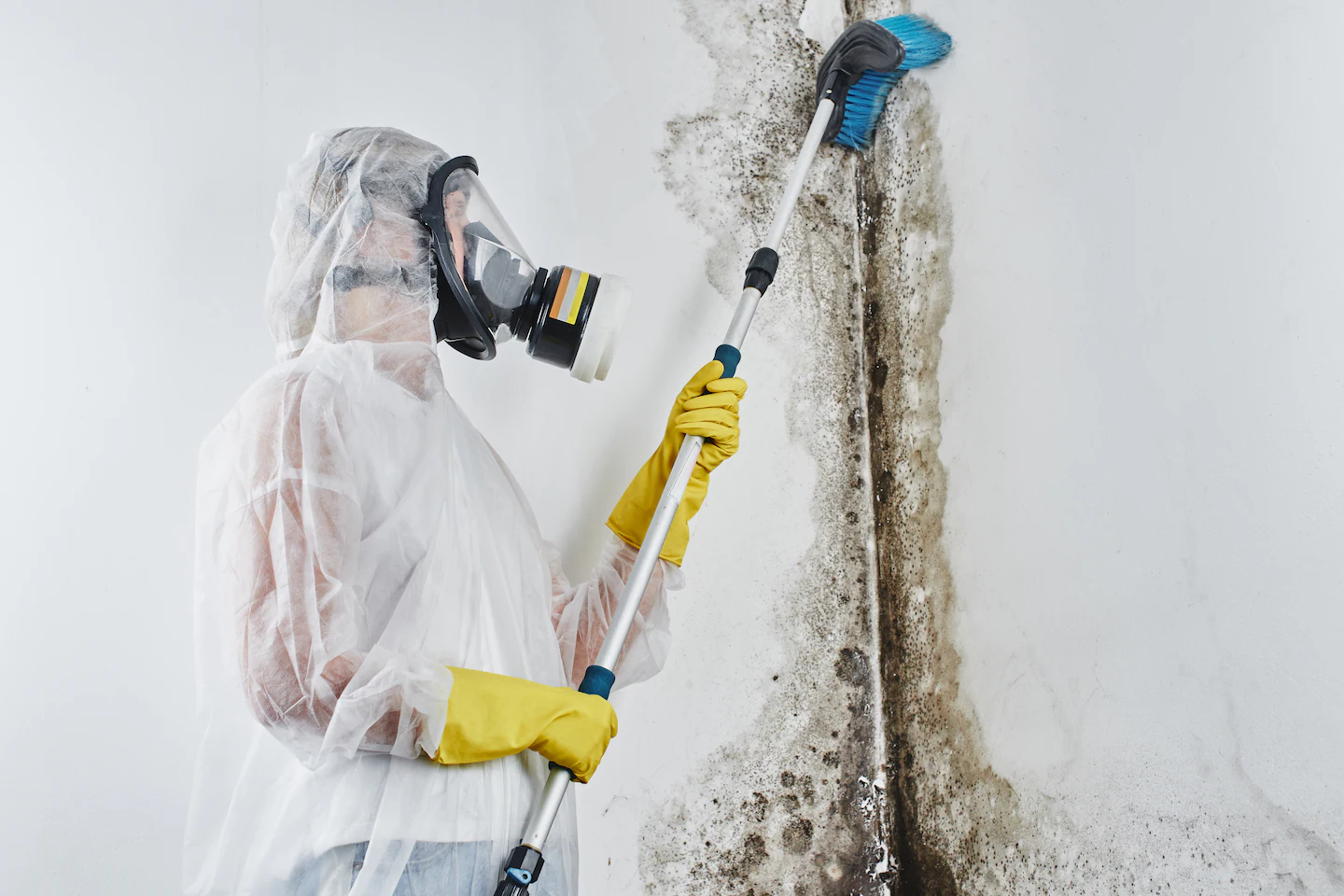
A mold assessment begins with the building conditions: visible growth, moisture, previous water damage, odors, and locations where mold may be concealed.
Moisture evaluation is especially important because mold remediation will not be successful for long if the water problem continues.
Air sampling and laboratory testing are sometimes useful, but they are not necessary for every visible mold problem.
EPA states that when visible mold growth is present, sampling is usually unnecessary. There are no federal numerical standards for acceptable indoor mold-spore concentrations, so an air sample cannot simply be compared with a universal federal “safe” number.
CDC likewise does not recommend routine mold testing for determining whether a home has a mold-related problem.
CleanPro provides mold remediation services for properties affected by mold growth and moisture-related damage. If mold testing, air sampling, or laboratory analysis may be needed, the appropriate type of assessment can be determined based on the conditions found at the property.
Mold can begin developing on damp materials within roughly 24–48 hours under favorable conditions, so correcting the moisture problem early can reduce the opportunity for growth.
FEMA states that mold colonies can begin developing on damp surfaces within 24–48 hours. EPA similarly recommends cleaning and drying damp or wet materials within approximately 24–48 hours when possible.
The timeframe is not an exact countdown. Temperature, humidity, airflow, material type, and the amount of water all affect mold development.
What matters most is moisture.
EPA summarizes the principle simply: the key to mold control is moisture control. If mold is removed but the underlying water problem continues, growth can return.
This creates an important connection between mold remediation and water damage restoration. After pipe breaks, refrigerator-line failures, dishwasher leaks, and other water losses, prompt extraction and structural drying can help reduce the conditions that support later mold growth.
Mold can develop wherever moisture repeatedly reaches organic or porous building materials, including both visible and concealed locations.
Common areas where homeowners discover mold include:
Mold can develop in many areas of a property where moisture is present, including walls, ceilings, flooring, basements, bathrooms, and other damp spaces. CleanPro evaluates the affected area and the surrounding conditions to determine the most appropriate remediation approach for the property.
Mold remediation cost varies according to the size of the affected area, where the mold is located, how much containment is needed, what materials must be removed, and whether reconstruction is required.
Current 2026 national consumer pricing from Angi places the average professional mold-remediation project at about $2,368, with many projects between approximately $1,223 and $3,756. Angi also reports that many professionals price mold remediation around $10–$25 per affected square foot. These are national consumer-market figures, not CleanPro prices or guarantees.
A visible patch on an accessible hard surface has a different scope from hidden mold that requires opening drywall, building containment, removing insulation, or rebuilding part of a room.
The major pricing factors generally include:
The cost of mold remediation varies based on the size of the affected area, the extent of the mold growth, the materials involved, and the work needed to address the underlying moisture problem. CleanPro can assess the property and provide project-specific information based on the conditions found.
For more detailed pricing information, see Mold Remediation Cost.
Homeowners insurance may cover mold remediation when the mold results directly from a sudden, covered event, but coverage is often limited and varies significantly by policy.
For example, mold developing after a sudden covered pipe break may be treated differently from mold associated with a long-term leak, unresolved humidity, or neglected maintenance.
Progressive explains that mold coverage may apply when mold results from a covered sudden or accidental peril, while mold caused by ongoing leakage or neglect is typically not covered. Mold-remediation coverage may also have special limits or exclusions.
The insurer determines coverage, deductibles, limits, and payment—not CleanPro.
CleanPro can document relevant restoration conditions and coordinate project information with the property owner and insurance company when insurance is involved.
A future Who Pays for Mold Remediation? guide can explore mold limits, covered-peril chains, and insurance exclusions in more detail.
Mold is primarily a moisture problem, so successful remediation requires more than treating the visible surface.
Homeowners often first notice mold because of discoloration or a musty odor. In other cases, mold is discovered after a pipe break, appliance leak, storm-related water problem, or long-term moisture condition.
The visible area may not show the full extent of the problem. Mold can grow on the back of drywall, beneath flooring, around plumbing, or in other concealed building cavities.
Routine species identification is usually less important than determining the size of the affected area and correcting the moisture source. EPA and CDC both emphasize addressing visible mold and moisture rather than relying on routine air testing.
If you are unsure whether the project is within CleanPro’s mold-remediation scope, call and describe the visible conditions, water history, location of the growth, and areas affected.
Small mold problems can sometimes be handled by homeowners, but larger, hidden, water-damaged, or complicated mold conditions are better evaluated before materials are disturbed.
EPA uses approximately 10 square feet as an important homeowner guideline. In many cases, an area smaller than about 10 square feet can be cleaned by the homeowner, while larger problems or extensive water damage warrant professional consideration.
For any mold cleanup, avoid these common mistakes:
Mold exposure affects people differently. CDC reports that some people exposed to damp and moldy environments may experience symptoms such as stuffy nose, coughing, wheezing, irritated eyes, or skin reactions, while people with asthma, mold allergies, chronic lung disease, or weakened immune systems may face greater risks.
CDC specifically recommends that people with significant respiratory conditions or weakened immune systems avoid participating in mold cleanup.
A future Does Bleach Kill Mold? page can cover the bleach question and proper cleanup boundaries in more depth.
Visible mold, persistent musty odors, recurring moisture, and mold developing after water damage are signs that the property may need further evaluation.
Common warning signs include:
A musty smell or physical symptom alone does not prove there is a major mold infestation. The property conditions and moisture history still need to be considered
Professional help should be considered when mold growth covers more than roughly 10 square feet, extensive water damage is involved, the growth is hidden or difficult to reach, or the project presents conditions that a homeowner cannot safely control.
EPA says that homeowners can often handle areas smaller than roughly 10 square feet themselves when the conditions are otherwise straightforward. Larger areas and significant water damage warrant professional consideration.
Sometimes, but whether occupants should remain depends on the size and location of the work, containment, access to unaffected living areas, and the health needs of the occupants.
Containment can help separate a remediation area from unaffected spaces, but it does not mean every project is automatically appropriate for continued occupancy.
CDC advises that people with asthma, COPD, weakened immune systems, and some other higher-risk conditions should avoid mold-damaged areas and mold-cleanup activities.
CleanPro provides mold remediation, but a black-mold-specific project should be evaluated individually to confirm that it falls within the company’s current scope.
From a remediation standpoint, CDC advises that Stachybotrys chartarum and other indoor molds should be addressed rather than treated differently solely because of color or species.
CleanPro Restoration Services provides mold remediation in Morris, IL, and approved nearby communities within approximately a 35–40-mile radius.
CleanPro primarily works with residential properties and also accepts select commercial restoration projects. Approved target communities include Plainfield, Shorewood, Joliet, and Naperville.
If visible mold, a persistent musty odor, or a recent water loss has created a mold concern, contact CleanPro to discuss what happened and determine whether the project falls within the company’s mold-remediation scope.
Call CleanPro Restoration Services at (833) 588-2776 for mold-remediation assistance in Morris, IL, and nearby communities.