Mold Remediation Cost
Quick Response to Any Disaster
- 24/7 Emergency Response
- Expert Restoration Services
- Advanced Technology
- Customer-Focused Care
- Trusted & Reliable


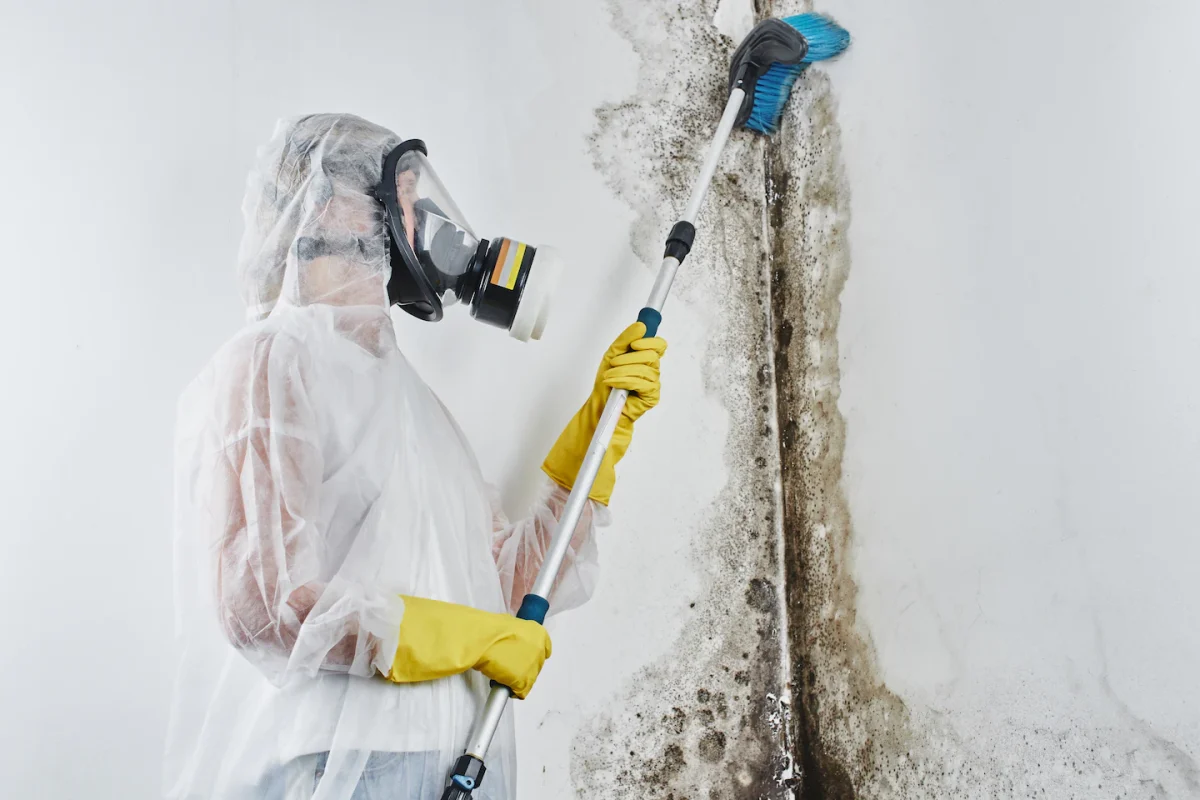
Professional mold remediation commonly costs around $10–$25 per affected square foot, while national consumer pricing places many projects around $2,368 overall, with a typical range of roughly $1,223–$3,753. Those numbers are useful for planning, but they are not a CleanPro price list. The actual cost depends on how much mold is present, where it is located, which materials are affected, how much containment is needed, and whether repairs or reconstruction follow.
A small patch of accessible mold on a hard surface is very different from growth behind drywall, inside insulation, across attic framing, or beneath flooring after a water loss. Two homes can have the same visible square footage of mold but very different remediation scopes once concealed materials are evaluated.
CleanPro Restoration Services provides mold remediation as part of its restoration services in Morris, Illinois and approved nearby communities. CleanPro also provides reconstruction, which can matter when contaminated drywall, insulation, flooring, trim, or other building materials must be removed before the property can be repaired.
CleanPro-specific mold pricing has not yet been approved for publication. For that reason, the figures on this page should be treated as general market planning information, not a quote from CleanPro.
Many professional mold-remediation projects fall between about $1,223 and $3,753 nationally, with an average around $2,368, but larger or more complicated projects can cost considerably more.
The average alone does not tell you much about a specific property.
A homeowner with 25 square feet of visible mold on an accessible bathroom wall may need a limited scope. Another homeowner with a similar-looking patch may have moisture behind drywall, damaged insulation, or growth extending into a wall cavity. The second project can require containment, demolition, cleaning, drying, and rebuilding even though the visible mold initially looked small.
A useful way to think about pricing is to separate the project into four parts:
The price can also change after concealed areas are opened. An estimate based on visible conditions may need adjustment if mold extends farther than expected.
CleanPro’s client pricing worksheet specifically calls for confirmation of items such as containment, air filtration, affected-material removal, surface cleaning, drywall replacement, insulation replacement, flooring work, and reconstruction before company-specific mold rates are published. Until those items are approved, national ranges should remain clearly separated from CleanPro pricing.
A common national planning range for professional mold remediation is about $10–$25 per affected square foot.
The important word is affected.
A 1,500-square-foot house does not automatically mean you are paying to remediate all 1,500 square feet. Pricing may be based on the portion of the structure that requires containment, material removal, cleaning, or other remediation work.
Using the $10–$25 national planning range, simple square-foot examples look like this:
|
Affected mold area |
General planning range |
|
25 sq. ft. |
$250–$625 |
|
50 sq. ft. |
$500–$1,250 |
|
100 sq. ft. |
$1,000–$2,500 |
|
150 sq. ft. |
$1,500–$3,750 |
|
250 sq. ft. |
$2,500–$6,250 |
|
500 sq. ft. |
$5,000–$12,500 |
These calculations are only square-foot illustrations. Real professional estimates do not always work as simple multiplication.
A limited project may still require setup, protective equipment, containment, HEPA filtration, labor, disposal, and final cleaning. On the other end, a large project involving accessible hard surfaces may not follow exactly the same cost pattern as hidden mold behind several finished building assemblies.
CleanPro has not confirmed that it prices mold remediation by square foot. Its current pricing-verification worksheet specifically asks whether the company uses a square-foot method, project pricing, included services, or another approach. Company-specific per-square-foot numbers should therefore not be added until the client approves them.
As the affected area and project complexity increase, mold-remediation costs usually rise because more containment, labor, removal, cleaning, and reconstruction may be required.
Severity is not determined by color alone. “Black mold” does not automatically create one price tier, and a light-colored mold problem is not automatically inexpensive.
What matters is the condition of the building.
|
General severity |
Example scope |
Planning consideration |
|
Limited |
Small accessible area with little material damage |
May require localized cleaning or limited removal |
|
Moderate |
Mold affecting drywall, trim, flooring, or a contained portion of a room |
Containment and material removal may increase cost |
|
Extensive |
Growth affecting several surfaces, concealed cavities, insulation, or multiple areas |
More demolition, cleaning, filtration, and rebuilding may be required |
|
Large or complex |
Multiple rooms, widespread concealed growth, difficult access, or substantial reconstruction |
Cost can move well above common national averages |
A 100-square-foot affected area calculated strictly at $10–$25 per square foot produces a planning range of roughly $1,000–$2,500.
A 250-square-foot affected area produces roughly $2,500–$6,250.
Those numbers help show why a larger project can exceed the national average quickly. They still do not account perfectly for demolition, repair, difficult access, specialty conditions, or reconstruction.
For the actual service rather than pricing methodology, see Mold Remediation in Morris, IL.
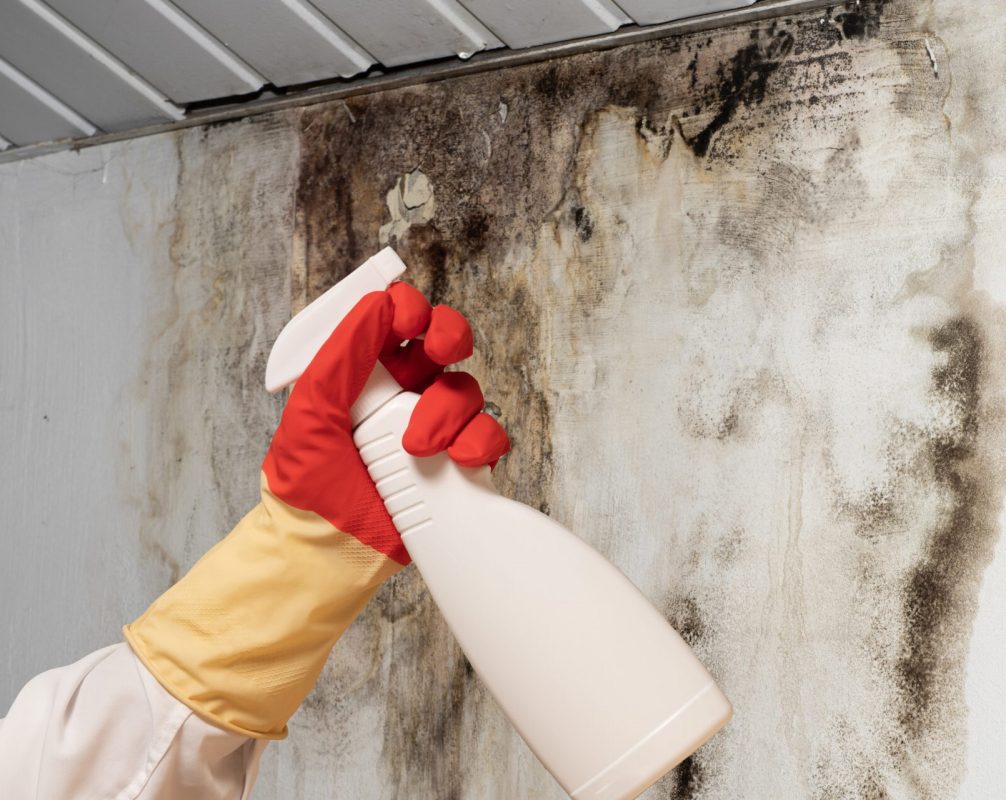
The room matters because access, building materials, moisture sources, and the amount of demolition needed can change from one part of the home to another.
Instead of assuming that every bathroom or attic carries a fixed price, it is more accurate to consider how much material in that location is actually affected.
Bathrooms often have smaller square footage but can contain several materials in a compact area: drywall, paint, tile assemblies, cabinets, trim, flooring, and plumbing.
If only 25–50 square feet requires professional remediation, using the national $10–$25-per-square-foot planning range produces about $250–$1,250 before accounting for project-specific setup or repairs.
The cost can rise when mold is behind a shower wall, inside a vanity, beneath flooring, or associated with a plumbing leak.
A visible surface patch and mold inside a wall cavity are not comparable projects.
If the moisture source involves a leaking supply line or another water loss, the wet materials may also need drying or repair before the mold problem can be considered resolved.
Basements can involve concrete, drywall, insulation, wood framing, finished flooring, trim, or other below-grade materials.
A hypothetical 100–200 square feet of affected area works out to roughly $1,000–$5,000 using the general $10–$25-per-square-foot planning method.
That is not a dedicated basement quote.
Water problems below grade can result from several conditions, and CleanPro’s current approved fact set does not establish basement cleanup as a separate standalone service. When mold or water damage reaches a basement or another below-grade location, CleanPro can evaluate whether the project fits its current restoration scope.
Finished spaces can also cost more to restore after remediation because drywall, flooring, insulation, and trim may need replacement.
Attic pricing can vary sharply because access and the affected materials matter as much as square footage.
Mold may appear on roof decking, rafters, trusses, insulation, or other wood surfaces. Working in a tight attic also tends to be slower than working in an open room.
If 100–250 square feet requires remediation, a simple $10–$25-per-square-foot calculation gives roughly $1,000–$6,250.
That should not be treated as a fixed attic price. Difficult access, extensive framing, insulation removal, containment, or moisture correction can change the final scope.
The source of moisture also matters. Roof leakage, condensation, ventilation problems, or another building condition may need to be corrected separately so the mold does not return.
Crawl spaces can be difficult to access and may involve joists, subflooring, insulation, and other concealed structural materials.
Using the same national pricing model, 100–200 affected square feet would produce a rough planning figure of $1,000–$5,000.
Again, this is arithmetic based on affected square footage rather than a CleanPro crawl-space price.
Access can make labor more difficult, and work such as encapsulation, drainage modification, plumbing repair, or long-term moisture-control systems should not automatically be included in a mold-remediation quote unless they are specifically part of the contractor’s scope.
Mold involving an HVAC system is harder to price with a basic room or square-foot calculation.
The important question is whether growth is on an accessible component, inside ductwork, around an air handler, or associated with moisture elsewhere in the system.
HVAC work can require an HVAC professional in addition to mold-remediation work. A contractor should not assume that cleaning visible mold near a vent means the entire duct system requires treatment.
EPA guidance also treats suspected HVAC contamination differently from a small surface mold problem because running a contaminated system can move material through the building.
CleanPro has not confirmed HVAC mold remediation as a dedicated specialty service, so an HVAC-related mold concern should be evaluated individually.
Whole-house mold problems are not simply the national average multiplied by the total floor area of the home.
A 2,000-square-foot house does not necessarily have 2,000 square feet of mold.
What pushes a project into a large-loss range is usually widespread affected material, multiple containment areas, extensive demolition, hidden growth, repeated moisture problems, or major reconstruction.
For example, 500 affected square feet at the broad $10–$25 national planning rate equals approximately $5,000–$12,500 before any unusually complicated repairs.
Widespread projects can go higher when large portions of drywall, insulation, flooring, framing, cabinetry, or other materials require removal and replacement.
The biggest mold-remediation cost drivers are the size of the affected area, location, materials, containment requirements, accessibility, moisture conditions, and reconstruction needs.
Square footage is only one part of the estimate.
A contractor may also consider:
This is why estimates based only on a photograph can be unreliable.
A professional estimate should reflect the physical scope found at the property rather than applying one universal rate to every mold job.
Inspection and testing can be separate from remediation, but not every visible mold problem needs laboratory testing before cleanup begins.
A visual assessment and moisture evaluation can be part of determining the scope. Air samples, surface samples, laboratory analysis, or written testing reports are separate services that may add cost when they are appropriate.
CleanPro’s current client information confirms mold remediation, but it does not yet verify mold testing, air sampling, laboratory work, or a dedicated mold-inspection service as standard CleanPro offerings.
The company pricing worksheet also leaves inspection and testing charges blank pending client confirmation.
For that reason, the website should not publish a CleanPro mold-inspection price, free-inspection claim, air-sample price, or laboratory fee until those services and rates are approved.
Testing can also be separate from remediation when an independent assessment is preferred or required.
The broader educational rule is simple: do not add testing costs automatically to every mold-remediation estimate unless testing is actually part of the project.
Homeowners insurance may pay for mold remediation when the mold results from a covered sudden loss, but mold associated with ongoing leakage, humidity, or maintenance problems is often treated differently.
For example, mold that develops after a sudden covered pipe break may have a stronger connection to a covered water loss than mold caused by a slow leak that continued for months.
Policies can also contain mold exclusions, sublimits, endorsements, deductibles, or other conditions.
That means two homeowners with similar mold damage can receive different coverage decisions.
When insurance is involved, document:
CleanPro can document relevant restoration conditions and coordinate project information with the property owner and insurance company. CleanPro does not determine whether mold remediation is covered or how much an insurer will pay.
See Does Homeowners Insurance Cover Water Damage? for the broader connection between sudden water losses and property coverage.
The most accurate mold-remediation estimate comes from understanding how much material is affected and what work is actually needed—not simply measuring the visible stain.
Before comparing estimates, look at what each scope includes.
A mold-remediation estimate may need to account for:
Ask whether reconstruction is included or priced separately.
That matters because one quote may stop when contaminated drywall is removed, while another may include putting the wall back together.
Also ask whether inspection or testing is included. Do not assume those services are automatically part of the remediation price.
For CleanPro specifically, mold rates should remain project-specific until the client’s pricing-verification worksheet is completed. The current worksheet has not yet confirmed a minimum job, per-square-foot mold rate, containment charge, inspection price, or standard small/mid-size project range.
That makes a property-specific estimate more accurate than publishing unsupported CleanPro numbers online.
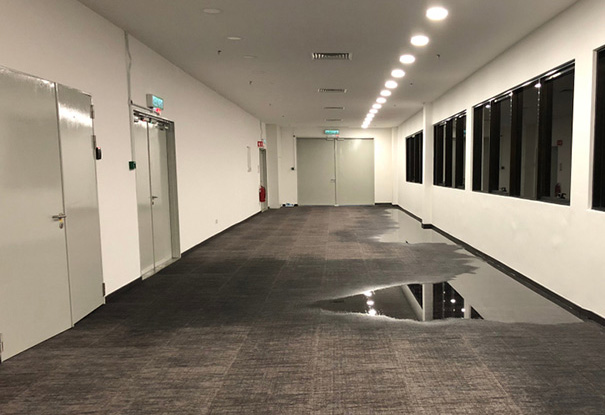
Professional remediation can be worth the cost when mold is extensive, hidden, affecting porous materials, connected to substantial water damage, or likely to require containment and reconstruction.
A small surface area may not justify the same response.
EPA commonly uses about 10 square feet as a guideline for situations many homeowners may be able to clean themselves, assuming the problem is otherwise straightforward.
Once the affected area becomes larger, hidden, or connected to damaged construction, the job changes.
Professional work can include containment, controlled removal, filtration, cleaning, moisture evaluation, and repair planning. Those steps explain why professional remediation costs more than purchasing a household cleaning product.
For an explanation of when DIY cleaning makes sense and where its limits are, see Mold Removal vs Mold Remediation.
CleanPro Restoration Services provides mold remediation for qualifying projects in Morris, IL, and nearby communities within about a 35–40-mile radius.
CleanPro primarily serves residential properties and also accepts select commercial restoration projects. Approved target communities include Plainfield, Shorewood, Joliet, and Naperville.
CleanPro’s actual mold-remediation price depends on the property and scope. The company-specific pricing worksheet has not yet established public mold rates, so national figures on this page should remain clearly labeled as general planning information.
Call CleanPro Restoration Services at (833) 588-2776 to discuss a mold-remediation project and request current estimate terms.