Water Damage Restoration Cost
Quick Response to Any Disaster
- 24/7 Emergency Response
- Expert Restoration Services
- Advanced Technology
- Customer-Focused Care
- Trusted & Reliable


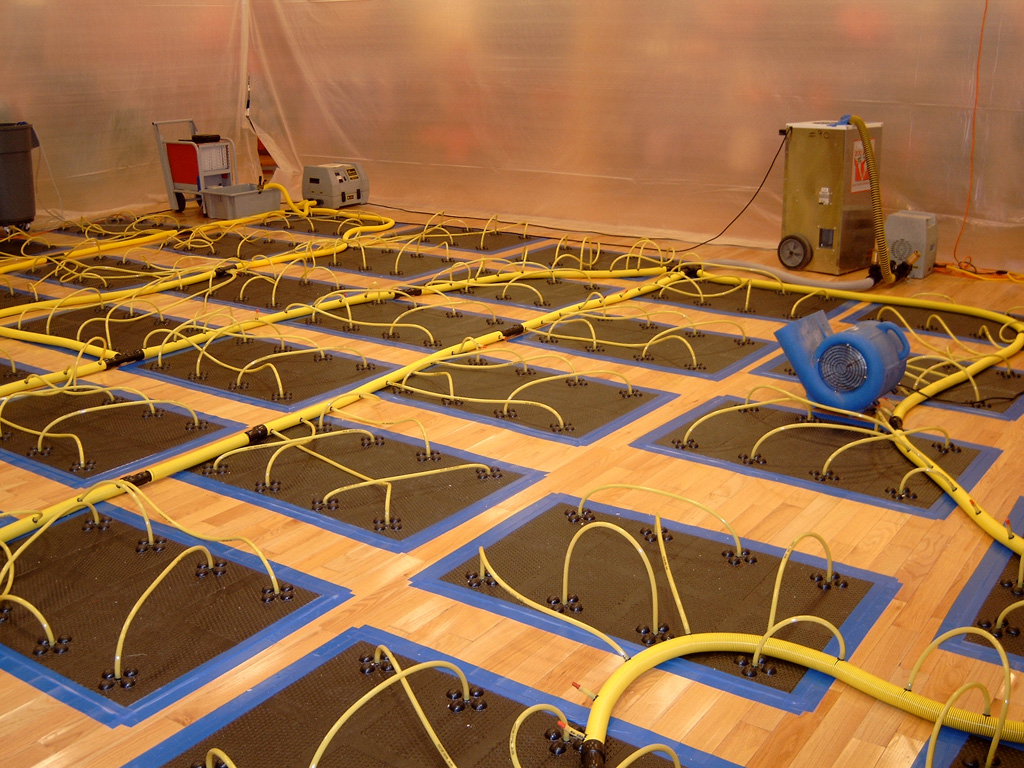
National water damage restoration prices vary widely, with current consumer pricing guides placing many projects in the low thousands and more extensive losses considerably higher. These figures are useful for general planning, but they should not be treated as CleanPro Restoration Services pricing or as a quote for a specific property.
Third-party consumer cost guides such as Angi and PuroClean publish national averages, typical ranges, per-square-foot estimates, and room-based examples. Those figures reflect broader market data rather than CleanPro’s own pricing structure.
For CleanPro specifically, client-provided project experience indicates that water damage projects can vary widely and often fall around $2,000–$10,000, with larger-loss projects potentially costing more. The actual amount depends on the source of the water, how far moisture has spread, which building materials are affected, how much extraction and drying are required, and whether repairs or reconstruction are needed.
CleanPro Restoration Services provides 24/7 water damage restoration from Morris, Illinois, primarily for residential properties and select commercial projects. Confirmed water-damage priorities include pipe breaks, refrigerator supply-line failures, dishwasher-line leaks, water extraction, drying, repairs, and reconstruction.
The final price should be based on the conditions found at the property rather than on a national average alone.
National consumer cost guides place many water damage restoration projects between roughly $1,300 and $6,500, with smaller losses below that range and major restoration projects potentially reaching $16,000 or more.
These numbers are general market context only. They are not CleanPro pricing and do not represent a guaranteed local range.
| Damage Severity | General National Planning Range | What the Work May Involve |
|---|---|---|
|
Minor water damage |
$450–$1,500 |
A limited water loss with focused extraction, drying, moisture evaluation, and little repair work. |
|
Moderate water damage |
$1,500–$6,500 |
One or more affected areas requiring extraction, drying, material removal, and some repairs. |
|
Severe water damage |
$6,500–$16,000+ |
Extensive moisture spread, multiple affected materials, significant removal, drying, and reconstruction. |
The difference between the ranges is usually related to scope rather than the amount of visible water alone.
For example, a refrigerator supply-line leak that is found quickly may affect a relatively small area. A burst pipe that releases water into walls, flooring, insulation, and multiple rooms may require considerably more extraction, drying, demolition, and reconstruction.
That is also why two properties with similar-looking damage can receive very different estimates. One may need limited drying and repair. Another may have moisture beneath flooring or inside walls that is not immediately visible.
CleanPro’s own client-provided project experience remains the more relevant company-specific reference: approximately $2,000–$10,000 for many projects, with larger losses potentially costing more.
Per-square-foot pricing is commonly used as a general industry comparison tool, but it does not reliably predict the total cost of every water damage project.
Current national consumer guides commonly place basic water cleanup and drying in a broad range of roughly $3–$7.50 per square foot, with pricing increasing when the loss is more complicated or requires additional safety, material removal, or repair work.
Using those national planning figures, the math may look like this:
| Affected Area | Lower-End National Planning Figure | Higher-End National Planning Figure |
|---|---|---|
| 100 square feet | $300 | $750 |
| 250 square feet | $750 | $1,875 |
| 500 square feet | $1,500 | $3,750 |
| 1,000 square feet | $3,000 | $7,500 |
These calculations should not be interpreted as CleanPro estimates.
A simple square-foot calculation may also leave out major parts of the project, including drywall replacement, flooring, trim, cabinets, painting, structural repairs, or reconstruction.
The measured affected area may be larger than the visible wet spot as well. Water can move beneath flooring, behind baseboards, into wall cavities, and through adjoining building materials.
That means an accurate estimate should be based on the actual moisture spread and restoration scope rather than simply multiplying the visible floor area by a published national rate.
Water condition and contamination can affect restoration cost because some losses require more cleaning, safety precautions, material removal, and disposal than others.
Professional restoration terminology often separates water losses into categories based on the condition of the water. The table below is provided as general educational context, not as a representation that CleanPro routinely handles every category or specialty loss listed.
| Water Category | General National Pricing Context | Why Cost May Change |
|---|---|---|
|
Category 1: Clean water |
About $3–$4 per sq. ft. |
Often begins with a sanitary supply source and may allow more materials to be dried when addressed promptly. |
|
Category 2: Gray water |
About $4–$6.50 per sq. ft. |
May require additional cleaning, protective procedures, and evaluation. |
|
Category 3: Black water |
About $7–$7.50+ per sq. ft. |
Can involve significant contamination and may require specialized handling or material removal. |
These are broad third-party market estimates rather than CleanPro pricing.
CleanPro’s confirmed water-damage focus includes common residential losses such as broken pipes, refrigerator supply-line leaks, dishwasher-line failures, extraction, drying, repairs, and reconstruction.
If the water source or contamination level falls outside the company’s confirmed public service scope, CleanPro can evaluate the circumstances and determine the appropriate restoration scope or next step.
For more detail about how water losses are evaluated and restored, see Water Damage Restoration Process: 6 Steps from Inspection to Rebuild.
The location of water damage can affect cost because different parts of a property contain different materials, finishes, fixtures, and access conditions.
The figures below are general national examples rather than CleanPro room-specific pricing.
Bathroom water damage can range from a relatively small repair to several thousand dollars when water reaches flooring, drywall, cabinets, or the subfloor.
National consumer pricing guides may include fixture-related examples such as leaking pipes, tubs, showers, or toilets, but those numbers should be separated from the restoration work itself.
Repairing a plumbing fixture does not necessarily include:
For that reason, the full cost depends on how far the water traveled rather than simply which bathroom fixture leaked.
Basement water damage pricing appears frequently in national restoration cost guides because below-grade areas can be difficult to dry and may contain finished walls, flooring, stored belongings, or other moisture-sensitive materials.
Published national estimates vary significantly depending on how much water is present and which materials are affected.
However, basement water removal is not currently confirmed as a standard CleanPro public service in the approved fact sheet.
For CleanPro-specific content, the safer approach is to treat this section as general cost education. If water damage occurs in a below-grade or hard-to-access area, contact CleanPro and describe the loss so the company can determine whether the project falls within its current restoration scope.
This page should not imply that CleanPro provides dedicated basement pumping, sump-pump cleanup, sewage cleanup, or other unconfirmed specialty services.
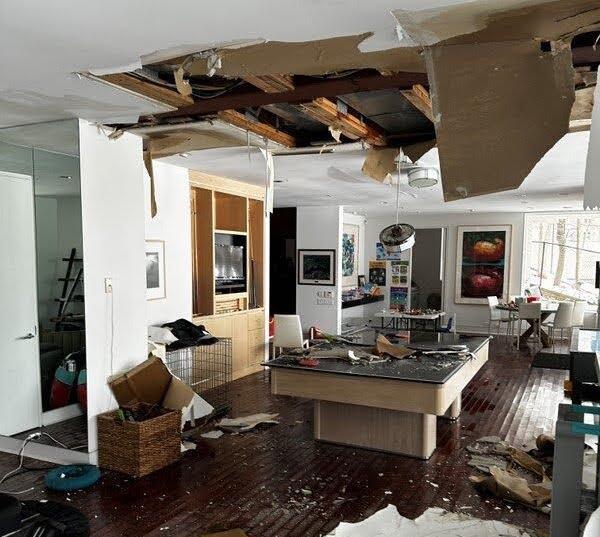
Ceiling water damage repair commonly appears in national cost guides in ranges from several hundred dollars to the low thousands, depending on the source and extent of the damage.
The final cost may depend on whether the visible problem is:
A visible ceiling stain can be only one part of the loss. The source above it should be identified before cosmetic repairs are completed.
If the ceiling is sagging or appears unstable, the room should be avoided until the condition is evaluated safely.
Whole-house or multi-room water damage can exceed typical national averages when the loss affects several rooms, building levels, flooring systems, drywall, insulation, or other structural and finish materials.
For CleanPro, the approved project-experience statement is that water damage jobs can vary widely and often fall around $2,000–$10,000, with larger-loss projects costing more.
A whole-house estimate should not be created simply by multiplying the property’s total square footage by a national cleanup rate.
Restoration contractors generally need to determine:
Those factors provide a more useful basis for an estimate than house size alone.
Water damage restoration pricing is driven by the actual size and complexity of the loss rather than by one universal rate.
The most important cost factors include:
Project timelines vary based on the size of the loss, the spread of moisture, affected materials, and reconstruction needs.
No standard three-day completion expectation should be presented as a CleanPro promise unless that timeline is separately approved for public use.
Homeowners insurance may cover some sudden and accidental water damage, but whether a specific loss is covered depends on the policy, cause, exclusions, and insurer.
A sudden pipe break or unexpected appliance-line failure may be treated differently from a condition that developed gradually.
General insurance education may also distinguish internal water losses from outside flooding or other causes, but those distinctions should not be presented as CleanPro coverage guarantees.
CleanPro can document visible restoration conditions and coordinate relevant project information with the property owner and insurance company.
The insurer—not CleanPro—determines:
Customers should report the loss promptly and ask their insurer or adjuster which documentation is required.
For a fuller explanation, see Does Homeowners Insurance Cover Water Damage? Claims, Coverage, and Exclusions.
A useful water damage estimate should explain the restoration work being proposed rather than provide only an unexplained total.
Depending on the project, an itemized restoration estimate may separate areas such as:
This is general estimate guidance, not a statement that every CleanPro estimate uses these exact line items.
Unconfirmed services such as contents pack-out, plumbing repair, source repair, dedicated after-hours charges, sewage cleanup, or specialty removal should not be presented as standard CleanPro estimate items unless the client confirms those offerings.
Not every project needs every line. The purpose of an itemized estimate is to help the property owner understand what work is being proposed and which parts of the project are included.
Ask questions when a scope is unclear.
For example:
A restoration estimate may change after hidden moisture or damaged material becomes visible, but revisions should still be explained.
When comparing companies, look beyond the lowest total. Communication, documented scope, restoration experience, reconstruction capability, and clarity about the proposed work can all affect the overall value of the project.
Professional water damage restoration can be worthwhile when water has entered building materials and extraction, drying, repairs, or reconstruction are needed.
A small surface spill is very different from water beneath flooring or inside walls.
The value of professional restoration is largely in determining how far moisture has traveled and addressing the affected materials before the damage becomes more extensive.
SERVPRO does not have one universal price for every water damage project, and pricing can vary by local franchise, project size, materials affected, and restoration scope.
Third-party and company-published national guides may cite averages and broad cost ranges, but those numbers should be treated as general market information rather than a guaranteed SERVPRO quote.
Because SERVPRO operates through local franchise locations, customers should compare actual written estimates and project scopes rather than assuming a national franchise or an independent local restoration company will always be more or less expensive.
This section is provided as competitor-comparison education and should not be interpreted as a statement about CleanPro’s pricing.
Water damage restoration can become expensive because a project may involve water extraction, professional drying equipment, labor, moisture monitoring, damaged-material removal, and reconstruction.
The visible water can sometimes be removed quickly, but that does not mean the building materials are dry.
Costs can also increase when flooring, drywall, insulation, trim, cabinets, or other finishes cannot be restored and need replacement.
The larger the affected area and the more reconstruction required, the greater the potential project cost.
CleanPro Restoration Services provides 24/7 water damage restoration in Morris, IL, and nearby communities within about a 35–40-mile radius.
The company primarily serves residential properties and also accepts select commercial projects.
Approved target communities include Plainfield, Shorewood, Joliet, and Naperville.
CleanPro’s confirmed water damage focus includes pipe breaks, refrigerator-line leaks, dishwasher-line failures, water extraction, drying, repairs, and reconstruction.
For losses or conditions outside that confirmed scope, call CleanPro to discuss the situation and determine the appropriate restoration scope.
CleanPro reports that its water damage projects can vary widely and often fall around $2,000–$10,000, with larger-loss projects costing more. A property-specific estimate is still needed because the final cost depends on the actual damage found.
Call CleanPro Restoration Services at (833) 588-2776 to request a water damage restoration estimate in Morris, IL or an approved nearby service area.