Mold Inspection
Serving Morris IL and the Surrounding Areas – 24/7 Emergency Response
Fast Mold Removal
- Biological Washing
- Biological Damage Assessment
- Remediation of Mold & Infested Materials
- Cleanup of Contents & Belongings





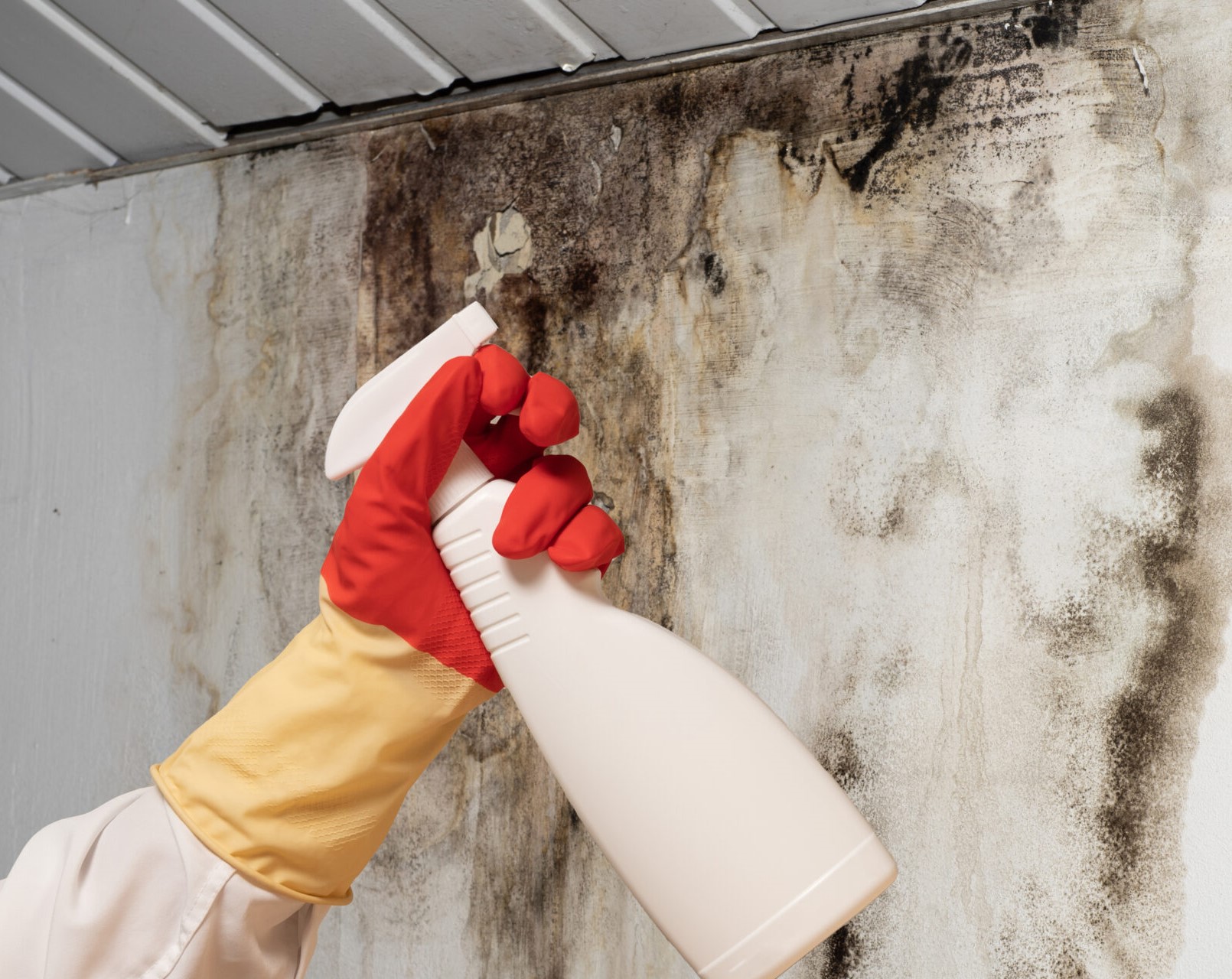
A professional mold inspection looks for visible or suspected mold growth, signs of excess moisture, and building conditions that may be allowing mold to develop in hidden areas. Testing can sometimes add useful information, but a good inspection begins with the building itself rather than automatically collecting air samples.
Mold needs moisture to grow. That is why an inspection may include looking at areas affected by previous leaks, plumbing failures, roof intrusion, condensation, high humidity, or other water problems. EPA guidance states that the key to controlling indoor mold is controlling moisture and that visible mold should be cleaned up while the underlying water problem is corrected.
CleanPro Restoration Services provides confirmed mold remediation and water-damage restoration services in Morris, Illinois, and nearby communities. The company’s client information does not currently confirm a separate mold-inspection, air-sampling, or laboratory-testing service. CleanPro’s existing site also clearly markets mold remediation but does not clearly publish a standalone mold-inspection or testing service.
For that reason, the inspection and testing information on this page describes how professional mold assessment generally works. Homeowners should confirm directly with CleanPro whether inspection or sampling is available for their particular project before scheduling it as a separate service.
A professional mold inspection is primarily an investigation of the building, moisture conditions, and areas where mold may be growing. Testing may be included when there is a clear reason for it, but EPA does not recommend treating laboratory sampling as a substitute for a careful visual and moisture assessment.

Depending on the property and purpose of the inspection, the work may include:
A thorough inspection often starts with the history of the property. An inspector may ask whether there has been a pipe break, refrigerator supply-line leak, dishwasher leak, roof leak, basement moisture problem, or previous flooding. That history can help narrow down where concealed moisture might remain.
Visible surfaces are then evaluated alongside areas more likely to trap moisture, such as around windows, below plumbing fixtures, beneath sinks, along exterior walls, in attics, crawl spaces, basements, and around previous water-damage locations.
Moisture meters can help identify materials that remain wetter than expected. Infrared imaging may also help locate temperature differences that deserve further checking, but neither tool proves that mold is present. Any suspected area has to be interpreted in the context of the building, the moisture source, and what can actually be observed.
If mold growth is confirmed and remediation is needed, the next step is deciding the extent of affected materials and correcting the moisture problem that allowed growth. CleanPro’s confirmed service in that area is mold remediation, not independent laboratory testing.
A future Restoration Equipment guide can explain moisture meters, air movers, dehumidifiers, infrared cameras, and other restoration tools separately.
Mold air testing collects a sample of airborne particles at a particular place and time so a laboratory can identify and count fungal spores or spore types captured in the sample. One common professional method uses a spore-trap cassette connected to an air-sampling pump.
Air is drawn through the cassette, and airborne particles impact the collection surface. The cassette is then sent to a laboratory where trained analysts examine the sample microscopically. Laboratory reports may identify fungal spores by type or genus/category where their visible characteristics allow and report concentrations or counts for the sampled air.
When air sampling is used as part of a building investigation, an outdoor sample is often collected for context alongside indoor samples. EPA guidance notes that outdoor control samples can be useful when interpreting indoor results and that, after successful remediation, indoor mold types and concentrations should generally be similar to those found in local outdoor air.
That comparison does not create a universal pass-or-fail number.
EPA states that there are no federal threshold limits for acceptable concentrations of airborne mold spores. CDC/NIOSH likewise notes that there are no health-based standards for mold in indoor air and does not recommend routine air sampling as the primary way to evaluate indoor mold conditions.
An air sample is also a snapshot. Spore levels can change with humidity, weather, ventilation, occupant activity, and other conditions. A low result does not prove that hidden mold is absent, and a high result does not by itself identify exactly where growth is located.
For that reason, air testing is most useful when it answers a specific question rather than being performed automatically.
A DIY mold test kit can collect a sample or show that mold-related material is present, but it cannot replace an investigation of why mold is growing, where moisture is coming from, or how far affected materials extend.
Mold spores naturally occur indoors and outdoors. EPA states that it is impossible to eliminate all mold spores from indoor air and house dust, which makes a simple “mold detected” result less informative than it may initially sound.
|
Question |
DIY Mold Test Kit |
Professional Inspection |
|
Can it collect evidence of mold? |
Yes, depending on the kit and sampling method |
Yes, when sampling has a defined purpose |
|
Can it locate the moisture source? |
Usually no |
Inspection can investigate leaks, damp materials, and moisture patterns |
|
Can it determine how far hidden growth extends? |
Not reliably |
A professional assessment can investigate suspect areas and building conditions |
|
Does a positive result automatically mean remediation is needed? |
No |
Findings are interpreted with visual, moisture, and building evidence |
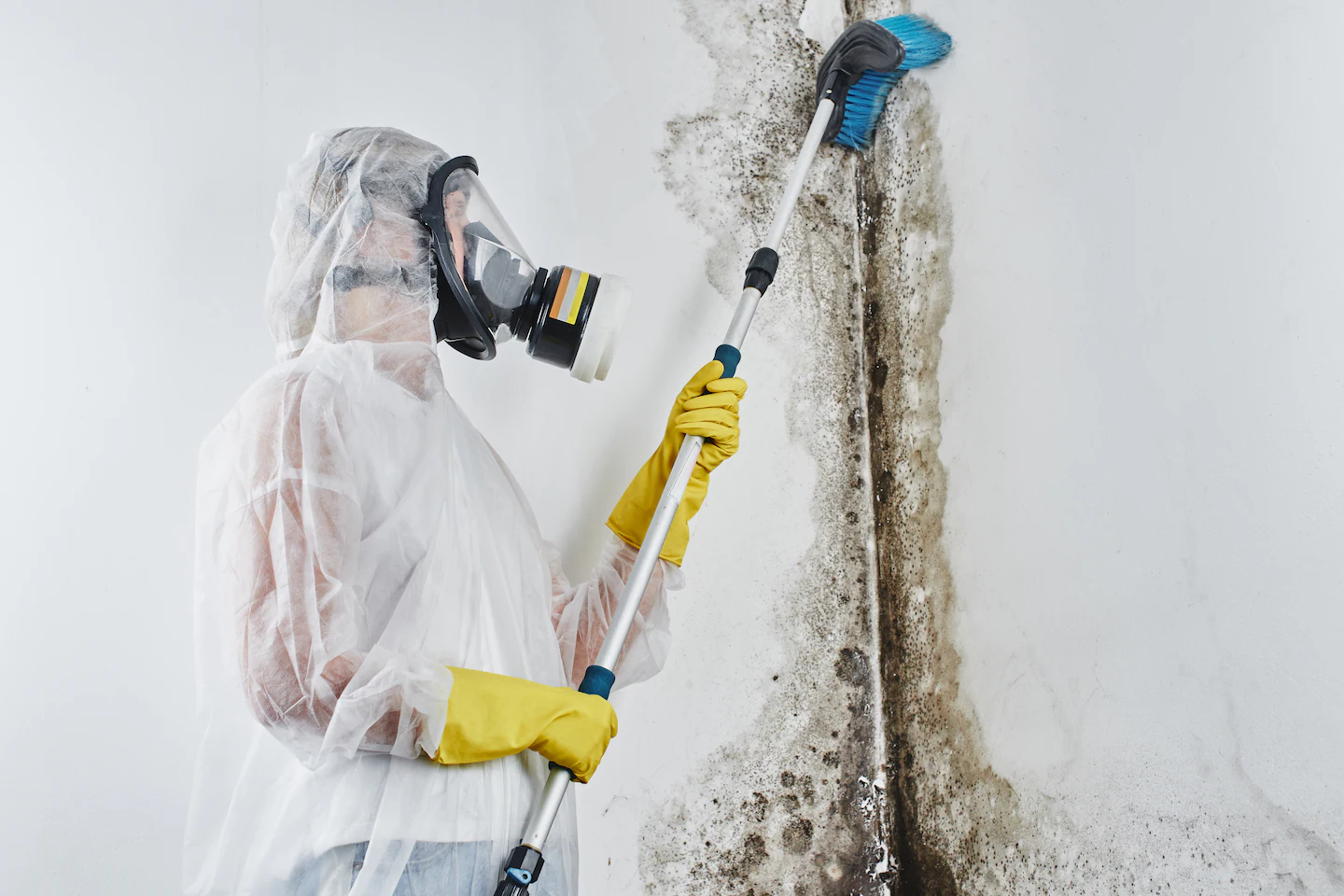
The limitation is not that every DIY test is useless. A kit may answer a narrow question about material collected from a particular surface or air sample. The problem occurs when a homeowner interprets any positive result as proof that the whole house has a serious mold problem.
Because spores are naturally present in the environment, testing has to be interpreted in context.
Professional assessment is more useful when the question is not simply “Is there any mold?” but rather “Is mold growing indoors, where is the moisture coming from, how much material is affected, and what should happen next?”
If visible mold growth is already present, EPA says sampling is unnecessary in most cases. When you can see mold and there is a known moisture problem, the practical priority is normally to correct the moisture problem and address the mold rather than paying for a test simply to prove mold exists.
This is one of the most useful distinctions for homeowners because mold testing is often marketed as though every suspected mold problem requires laboratory confirmation.
EPA specifically states that no federal limits have been established for mold or mold spores. Testing therefore cannot tell a homeowner whether a building “passes” or “fails” a federal mold standard because no such federal numerical standard exists.
Testing may make more sense when it answers a question that visual inspection cannot resolve. Hidden mold is one example. If there is a persistent musty odor, previous water damage, or another reason to suspect growth behind a wall or in another concealed area, an experienced professional may need to investigate further.
Sampling can also sometimes be useful when the source of contamination is unclear, when distinguishing suspected mold from soot or dirt matters, or when evaluating conditions after remediation. EPA notes that surface sampling may be useful for determining whether an area has been adequately cleaned or remediated.
Real-estate transactions, legal disputes, or projects with a specific clearance requirement can create additional reasons for formal sampling. In those situations, the sampling plan should be designed around the question that needs to be answered rather than simply collecting as many samples as possible.
Health symptoms require a separate boundary. Mold exposure can affect some people, but an air-sampling result cannot diagnose whether mold caused a particular person’s symptoms. CDC states that short-term spore counts cannot be interpreted directly as measures of individual health risk. Anyone with medical concerns should discuss those concerns with a healthcare professional rather than relying on a home mold test as a medical diagnosis.
When visible mold already needs removal, a mold remediation crew can focus on the affected materials and moisture conditions rather than delaying corrective work solely for routine testing.
Professional mold inspections currently cost several hundred dollars in many U.S. markets, but the price can rise when the property is large, difficult areas need evaluation, or multiple laboratory samples are collected.
Updated 2026 consumer data from Angi places most mold inspections between approximately $303 and $1,045, with an average around $671. Home size and accessibility are among the major cost drivers.
That is a more current range than the $300–$650 figure in the original brief.
Sampling can also affect the final price. Air tests, surface samples, additional rooms, HVAC sampling, and laboratory analysis can be priced separately depending on the provider. Angi currently estimates mold testing itself at roughly $250–$500 in many cases, although the exact amount varies with the sampling plan.
A small property where the concern is limited to one accessible area may cost less than a large house where the inspector has to evaluate an attic, basement, crawl space, wall cavities, and several previous water-damage locations.
The purpose of the inspection matters too. A visual moisture assessment may have a different price from an investigation involving several indoor air samples, an outdoor control sample, surface samples, and a detailed laboratory report.
If remediation is ultimately needed, see Mold Remediation Cost for the separate factors that affect cleanup and restoration pricing.
A mold inspection is most useful when there is a reasonable reason to suspect hidden moisture or mold but the location or extent is unclear.
A persistent musty odor is one example. Odor alone does not prove mold is present, but an unexplained musty smell can justify checking for damp materials, concealed leaks, or growth in areas that are difficult to see.
Recent water damage is another reason to investigate. A burst pipe, appliance supply-line leak, roof intrusion, or other water event can wet materials behind walls or beneath flooring. EPA advises drying water-damaged areas within roughly 24–48 hours where possible because prolonged moisture supports mold growth.
Visible suspect growth also deserves attention, although visible mold often means you do not need routine sampling just to confirm its presence. The better question may be how extensive the growth is and what moisture source needs correction.
Recurring condensation, peeling finishes, damp drywall, swollen baseboards, or repeated staining can also point toward moisture conditions worth investigating.
Some occupants notice allergy-like or respiratory symptoms that seem worse in a particular building. Those symptoms do not prove mold is the cause and should not be used as a diagnostic mold test. A building inspection can evaluate dampness and visible growth, while medical questions belong with a healthcare professional.
The same principle applies after water damage restoration. If materials remained wet for an extended period or a hidden area could not be adequately evaluated, a mold assessment may help determine whether additional investigation is warranted.
A future Musty Smell in House guide can cover odor-related causes separately without treating odor as automatic proof of mold.
A professional mold inspection currently costs about $303 to $1,045 in many U.S. markets, with a 2026 national average of roughly $671. The final cost depends on the size of the property, how accessible the suspected areas are, the number of samples collected, and whether laboratory testing is included.
These are national consumer estimates, not CleanPro pricing.
CleanPro has not confirmed a standard inspection fee or a free inspection-with-remediation-estimate offer. Call the company to confirm whether mold inspection or testing is currently available and what terms apply before scheduling.
Yes, a DIY test can collect a sample or indicate that mold-related material is present, but it usually cannot tell you where the moisture problem originates or how far hidden growth extends.
Because mold spores naturally occur indoors and outdoors, detecting spores alone does not necessarily establish that a building has an abnormal mold-growth problem. EPA states that visible mold generally does not require sampling and that there are no federal airborne mold limits against which a home test can be judged.
A professional inspection is more appropriate when you need to investigate hidden growth, moisture conditions, the extent of affected materials, or whether sampling has a useful purpose.
A professional mold inspection commonly takes about two to six hours, depending on the size of the property, accessibility, and how much investigation is required. Current 2026 consumer data notes that an inspection limited to obvious accessible areas may take around two hours, while more extensive work in difficult locations can take as long as six hours.
If samples are collected, the inspection visit and the final laboratory report are separate steps. Laboratory analysis is often returned within approximately 24–48 hours, although turnaround varies by laboratory, sample type, and provider.
A homeowner may therefore receive initial visual findings during the visit and wait another day or more for formal sample results.
CleanPro Restoration Services serves Morris, IL, and nearby communities within about a 35–40-mile radius, including Plainfield, Shorewood, Joliet, and Naperville.
CleanPro’s confirmed services include mold remediation, water damage restoration, reconstruction, storm damage restoration, and fire damage restoration.
If you see mold, smell a persistent musty odor, or are concerned about moisture after previous water damage, contact CleanPro to discuss the property and determine whether the issue falls within its current mold-restoration scope.
Call CleanPro Restoration Services at (833) 588-2776 to discuss mold concerns in Morris, IL and approved nearby communities and confirm whether inspection or testing is available for your project.